See the steps below to plan the right work for your roof.
Start with the roof and the chimney
Water near a chimney may call for more than one kind of check. Ask for the roof joint and the chimney itself to be reviewed within a clear scope. A stain beside the chimney does not prove that the flashing is the cause. You need to know what was found, who checked it, and which parts were outside that review.
Keep the first goal small and clear. You want to know why water is there. You also need a plan for the next step. You do not have to pick the repair now. You may need roof work, brick work, or both. Share the signs with trained experts and ask how they will sort that boundary. If one refers you to another, ask what question still needs an answer.
Know the parts named in the report
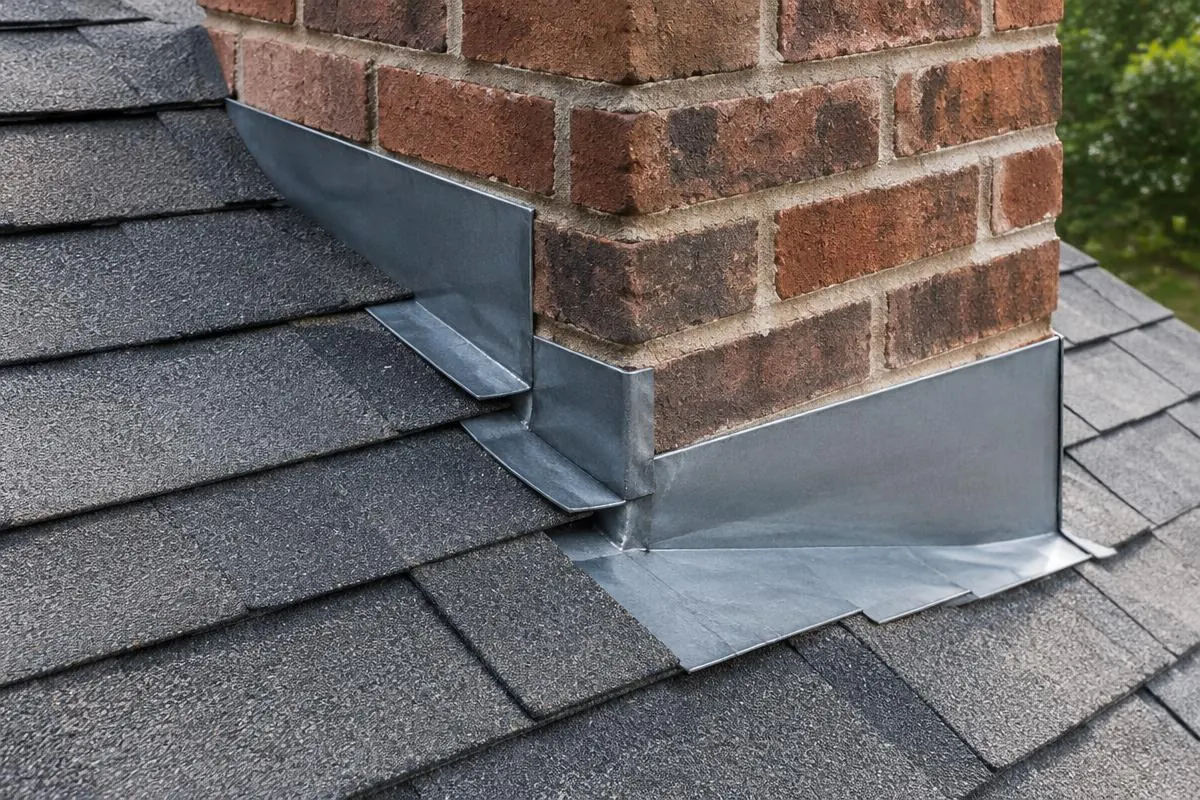
The roof joint is where the roof meets the outside of the chimney. GAF explains that base flashing and counterflashing work together there. The upper part overlaps the lower work to help shed water. You do not need the exact fitting steps to ask which part is damaged or what a repair includes.
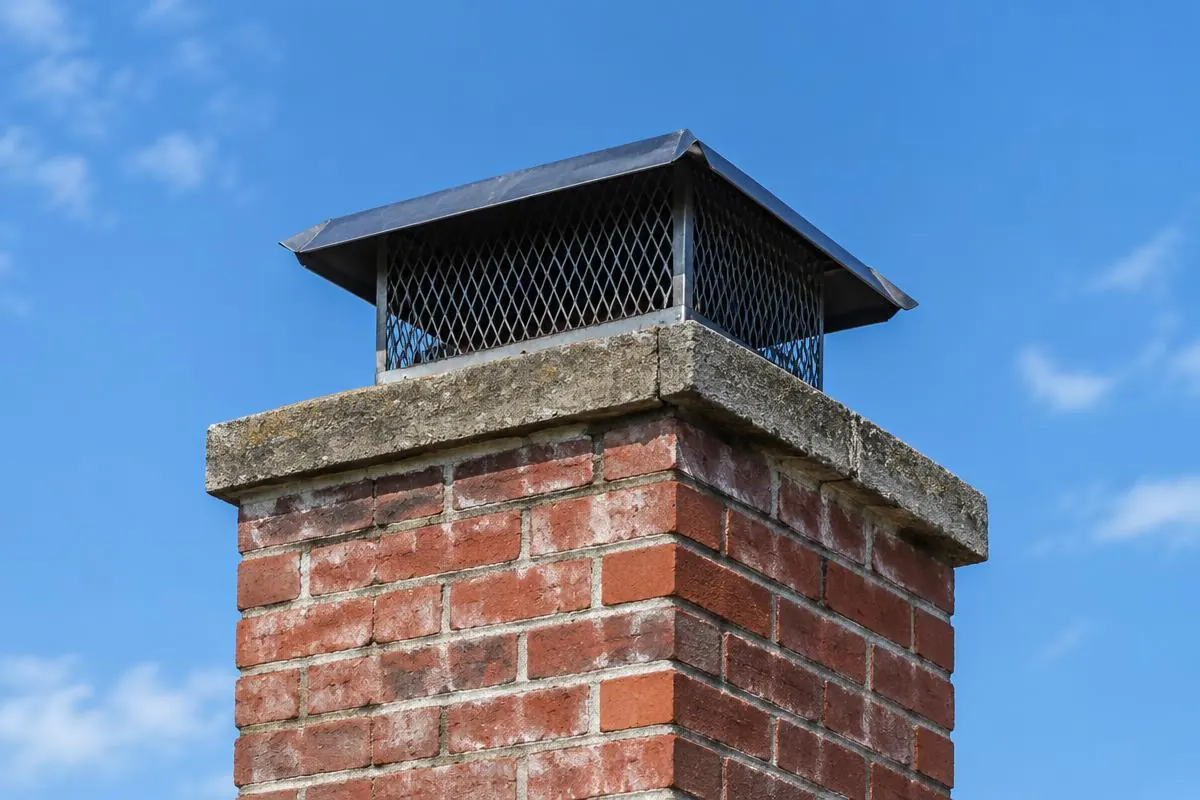
The top of a masonry chimney has other parts. The crown is the top surface around the flue opening. A cap sits above an opening. The Chimney Safety Institute of America describes caps, crowns, flashing, and brick or mortar as distinct water concerns. That is why a plan labeled ‘chimney repair’ needs more detail before you can compare it with another.
Four separate parts
- 1Cap and crown
Check the top as its own area.
- 2Brick and mortar
Keep masonry findings separate.
- 3Roof flashing
Check the joint where roof meets brick.
Write down where water shows up
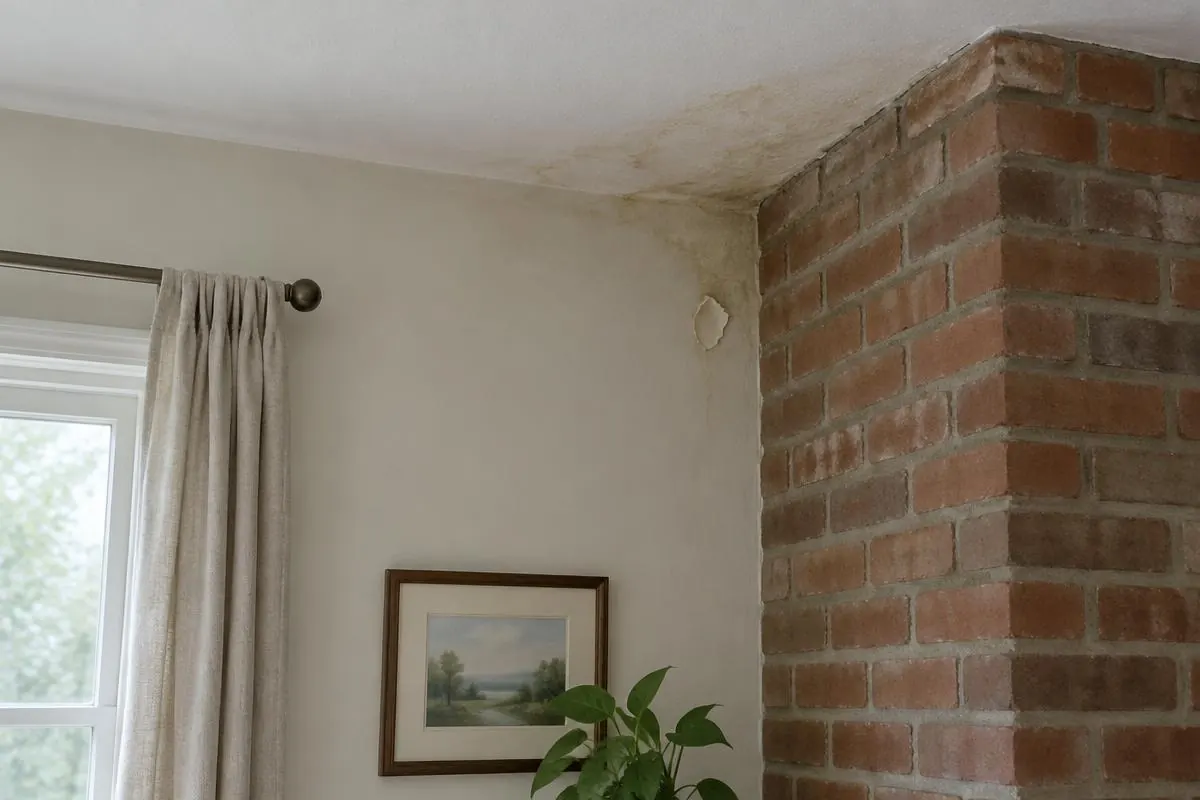
Make a note of every place you have seen water or a new mark. Is it on the room ceiling beside the chimney? On exposed brick? Inside a fireplace? Near a wall on another floor? Use those plain locations. They may lead to different questions, so avoid putting them all under one label.
Take pictures from safe floor space if you can. Include a wide view so the expert can see where the mark sits. Save the date and note whether rain was falling. Do not reach into a chimney, climb to its top, or light a fire as a test. Ask about the wet area. Ask about heating safety too. These are two checks with different goals.
Keep roof clues distinct from masonry clues
A photo of loose flashing may be useful, but it does not describe the whole chimney. A photo of worn mortar has the same limit. CSIA notes that brick can take in water and that poor mortar joints can increase water entry. This supports asking about the masonry; it does not diagnose your chimney from a picture.
Use two columns in your own notes. One is for things seen at the roof joint. The other is for things seen on the chimney or indoors. Put unknowns in a third short list. When you speak to an expert, ask which items they can check. You can then tell whether a second trade is needed without treating one report as a full review of everything.
Tell Us About Your Roof
Tell us what needs attention.
Use this boundary checklist
Ask each person which row their review covers. Mark a row open if no one has checked it. This is a planning aid, not a diagnosis.
| Area or question | Who to ask | What the written plan should clarify |
|---|---|---|
| Roof meets the chimney | A licensed roofer; work with with the chimney expert. | Which roof-joint parts and sides are included? |
| Crown, cap, brick, or mortar | A qualified chimney or masonry expert. | Which specific findings and repairs are included? |
| Fireplace or flue safety | A trained chimney expert. | Is a distinct safety review needed? |
| Water-damaged room | The appropriate repair trade. | Who assesses, dries, and restores the affected area? |
Make the first call about scope
Start by describing the water signs and any immediate hazard. Then ask what kind of work the person handles. If you call a roofer, ask whether they assess only the roof joint or also arrange a chimney review. If you call a chimney expert, ask which outer roof-joint questions they can address.
Do not rely on the name of the firm. Ask what it does. Ask who will inspect, who will write the findings, and who would carry out each repair. For the roofing part in Illinois, check the actual roofing business and its state license details. Check the firm that will do the work. One firm cannot use another firm's license as its own.
Ask for a report that shows its limits
A useful report names what was visible, what was checked, and what was not checked. Ask for a wide photo of the chimney and close views of the findings. If the back side or top could not be checked, the report should say so. A clear limit helps you decide what remains to be done.
Ask the expert to keep facts and possible causes apart. ‘This part is loose’ and ‘this may explain the stain’ are different statements. Both can be useful when they are labeled. If more access or testing is planned, ask what it will answer. Also ask what risks, changes, and follow-up work that step would involve before you agree to it.
Read a roof-flashing scope closely
For flashing work, ask which sides of the chimney are included. Ask what roof material has to be removed and what will stay in place. The plan should explain how the roof joint will be rebuilt or repaired as a system. A single line for metal or sealant does not tell you the whole task.
Ask how work at the masonry edge is handled. Will part of the wall need repair before the flashing work can be finished? Who will decide that, and who will do it? Find out how hidden damage below the roof surface will be recorded. These questions help you compare a defined repair with a bid that leaves key steps to be worked out later.
Tell us where the leak, wear, or damage needs attention.
Read a masonry scope as its own task
If crown, cap, brick, or mortar work is planned, ask for each part to be named. Ask which finding supports it. A broad phrase such as ‘seal chimney’ can hide several different tasks. Ask what the plan does. Will it fix a flaw, change a part, add a product, or do more than one task?
Ask why the chosen parts fit the chimney. Ask what care they need after the work. Do not use a generic coating as a homeowner test. The right method must fit the chimney and product. Keep any chimney or heating safety review distinct from the water repair. An outer water fix is not, by itself, proof that a fireplace is safe to use.
Decide who will own the overlap
If two trades will work on the chimney, give each the needed scope from the other. Ask them to flag any gap or conflict before work starts. One may need the other to complete a step first. Write down that order. Ask who will keep the work area safe between stages.
Choose one point of contact for each task. Keep the names and dates in the project note. Ask whom you should call if water returns after both jobs are done. Without that plan, you may spend time telling the same story twice. A clear handoff makes it easier to get the right area reviewed without deciding on your own whose work is at fault.
Compare bids by the parts they include
Place the scopes beside a simple outline of the chimney. Mark the roof joint, top, and masonry areas each bid includes. You may find that two totals describe different projects. One could address only the flashing while another also deals with the crown. That is a scope difference to understand before comparing price.
Ask each expert about the parts their plan leaves in place. What did they find that supports keeping them? What remains unknown? If one plan is much broader, ask what evidence requires the extra work. You can seek another review if the explanations stay unclear. A larger plan is not always best. A small one may still leave out needed work.
Two scopes, one handoff
- 1Roof-joint scope
Name the sides of flashing included.
- 2Masonry scope
Name crown, brick, or mortar work.
- 3Overlap
Assign who checks remaining parts and work order.
Try a two-scope example
Use this planning example to compare two scopes. One bid says it will replace flashing on two sides of a brick chimney. A second says it will repair the crown. Those bids may address two real needs, but they do not answer the same question. Ask each person what they found and how it fits the water seen inside.
Next, mark the parts each bid leaves out. Who checks the other two sides? Has anyone reviewed the brick and mortar? Who will say if the roof work must wait for the top repair? The point is not to merge both bids at once. It is to learn whether the plans overlap, leave a gap, or serve two distinct needs.
Keep safety distinct from a water fix
Smoke, a gas smell, a carbon monoxide alarm, or signs of fire call for the right urgent response. Leave the area and call emergency services when there is an immediate threat. Do not treat those signs as an ordinary roof appointment. Tell the expert about any past chimney fire or known heating-system concern.
CSIA advises that a chimney should not be used after a chimney fire until a trained expert has checked it. Some fire damage may be hidden. This is a distinct reason for expert help, even if the current question is water. Do not use a dry ceiling, fresh flashing, or a new cap as a substitute for that safety review.
Close the project with a clear record
Save the findings, scopes, approved changes, and completion photos for both roof and chimney work. Note which expert handled each part. Ask what was checked at the end. Ask what still needs work. Save any care notes with the work record.
If a mark changes later, record the date and location from a safe place. Share the earlier reports instead of starting with a claim that one part failed. For a Peoria-area home, arrange work for the actual property and confirm the right local review where needed. Use the findings to plan the right roof, chimney, and heating checks. Keep each agreed next step with its contact name.
Chimney Leak Repair in Peoria: the key steps
Read the full transcript
Chimney Leak Repair in Peoria.
A mark near a chimney does not pick the repair.
Ask about the roof joint and the chimney itself.
The cap, crown, masonry, and roof flashing are distinct parts.
Use labeled photos to see which one a report means.
Ask what each expert checked and what was outside the review.
Leave untested causes marked as open questions.
If roof and masonry work both need attention,
write down who owns each step and which must happen first.
New flashing does not establish fireplace safety.
After a chimney fire, seek a qualified review before using it again.
Your questions, answered.
Does water next to a chimney mean the flashing is bad?
Not always. The location gives the expert a place to start. Ask for the roof joint and needed chimney parts to be checked before choosing a repair. The finding should support the work, not just sit near the stain.
Are a chimney cap and crown the same thing?
No. The crown is the top surface around a masonry chimney opening. A cap covers an opening above it. Ask which part the report names and request a labeled photo if the wording is unclear.
Can one company handle the whole project?
Some may cover several tasks, but you should verify the scope and skills and license needs for each one. Ask who will do the roof work, masonry work, and any safety review. A business name alone does not define those roles.
Will new flashing make my fireplace safe to use?
Flashing work addresses the roof joint. It does not establish the state of the flue or heating system. If there was a chimney fire or a safety concern, get an expert review before use.
What if two experts disagree about the cause?
Ask each to name the evidence and the limits of their review. Share the needed reports and ask what further check could resolve the gap. Avoid approving overlapping work until you understand what each task is meant to address.