See the steps below to plan the right work for your roof.
Find the joint before you name the repair
Flashing is material that guides water at roof joints and openings. It is used at places such as walls, valleys, pipes, and roof edges. These spots do different jobs. So 'flashing repair' is not one fixed task. Start by asking which joint is in question and what the roofer found there.
A leak near a joint can raise a useful question. It cannot prove the answer. Ask for a photo that shows the joint in the wider roof, then a closer view of the concern. You need enough context to understand what work is proposed. You do not need to climb up and inspect the joint yourself.
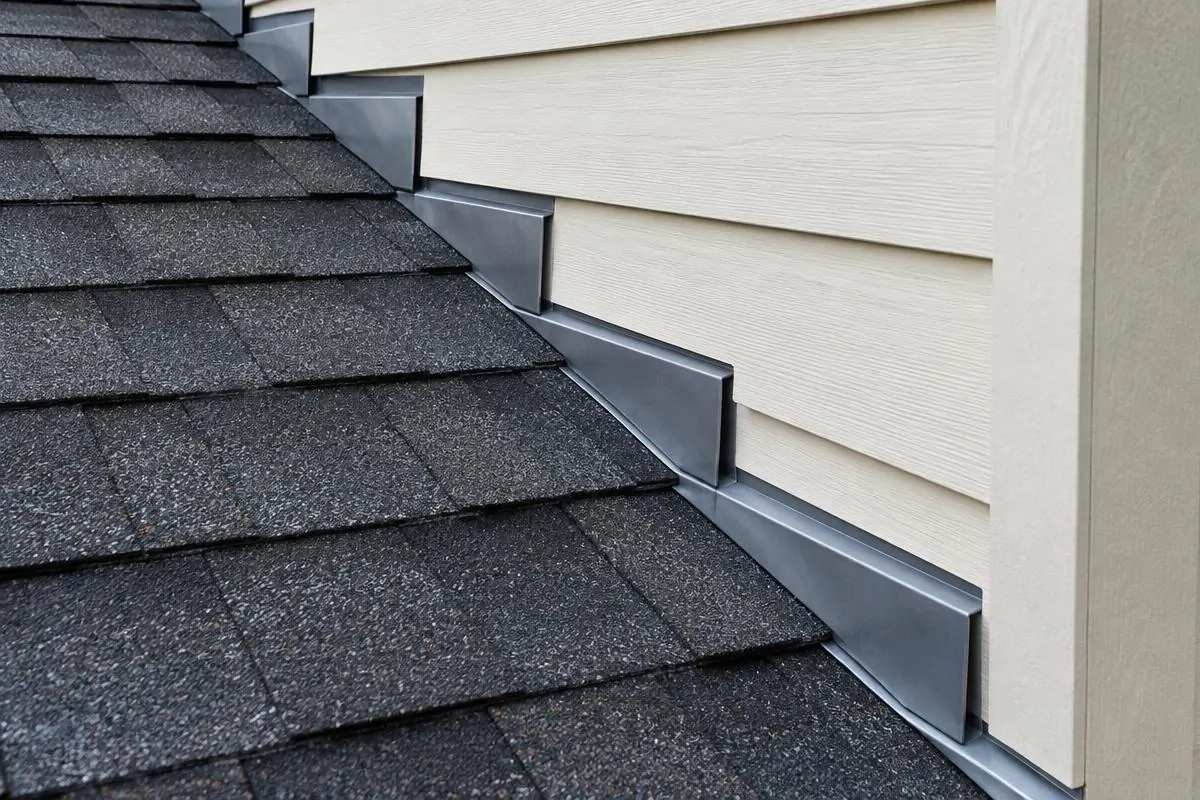
Use a plain map of the roof
Make a list of the features you can see from safe ground. A roof may meet a tall wall at one side. It may form a valley in the middle and have several pipes farther up. Give each feature a simple name. ‘Pipe above the back door’ is enough if it lets you and the roofer refer to the same place.
Keep unseen parts on the list too. Mark them ‘view blocked’ rather than leave them out. This helps you ask what the professional was able to inspect. If the leak sits near a chimney, use the separate chimney page as well. Chimney work can involve masonry and other parts that a general flashing scope may not cover.
Understand the three main questions
First, where is water meant to go at this joint? Second, what finding suggests that path is not working? Third, what will the proposed work change? These questions help turn a vague concern into a plan. You can ask them without knowing the trade name for each piece of metal.
GAF explains that flashing can both block water entry and direct water off the roof. At a roof-to-wall joint, pieces may work with the shingles and wall. At a valley, two roof faces drain toward one area. Those roles are different. Ask the roofer to show how the chosen work fits the exact joint. Shiny new metal alone does not prove a good fix.
Water at a joint
- 1Roof
Identify the roof face above the joint.
- 2Interface
Ask how roof and wall layers meet.
- 3Outward route
Ask where water should drain, not how to install it.
Keep a joint-by-joint note
For each place of concern, write what you saw and when. If there is an indoor mark, name the room and its position. If you can see loose metal from the ground, describe where it is. If the only concern is an old repair note, say that. Keeping these types of evidence separate makes the next talk clearer.
You may have several issues at once. A bent edge near a gutter may be unrelated to a stain by a wall. Do not join them into one cause without an assessment. Give the roofer the full list and ask which items are linked. A useful report should also state which areas could not be seen well enough for a firm view.
Tell Us About Your Roof
Tell us what needs attention.
A scope check for each kind of joint
Use the joint that matches the concern. The question in the last column helps reveal work that might otherwise be left out.
| Joint | Ask the roofer to identify | Check this scope boundary |
|---|---|---|
| Roof meets a wall | The exact run and the roof-to-wall detail. | Who handles wall trim or siding? |
| Two roof faces meet | The valley type and length under review. | How far does work extend on each side? |
| A pipe passes through | The pipe and flashing system being assessed. | Does the job include any work on the pipe itself? |
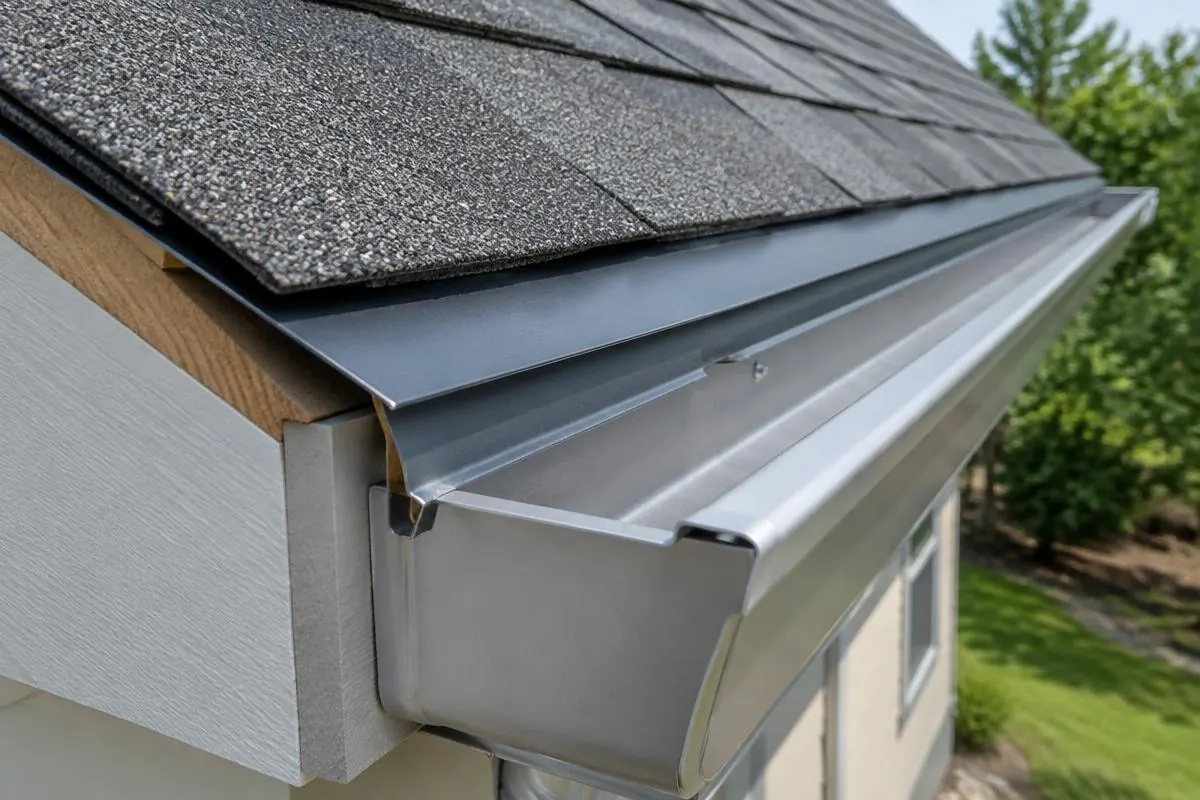
| Roof ends at an edge | The edge detail and nearby drainage parts. | Which gutter or trim work is included? |
Ask about roof-to-wall work
Where a sloped roof meets a wall, ask how the proposed work joins both parts. Will any wall trim or siding need to be moved? Who will do that work? What will be left in place? These are scope questions, not instructions for taking the wall apart. Clear answers can prevent a gap between the roofer's task and someone else's.
Ask for photos of the finding before it is covered. If the roofer cannot show hidden parts without opening them, ask how that limit affects the first estimate. Find out who approves more work if damage is found. Also ask who puts back any wall material. ‘Repair flashing’ may not tell you whether that finish work is included.
Ask about valleys as a whole path
A valley is the line where two sloped roof faces meet. Ask which length of the valley was checked and how the proposed work fits the roof on both sides. A close photo of one spot may not show the whole area the roofer is describing. Request a wide view that marks the start and end of the work.
Do not judge a valley only by whether you can see metal. Ask the roofer to identify the actual roof system and the detail it uses. The aim is to understand your roof, not to make it look like a photo of a different one. A bid may call for a change in the valley detail. If so, ask why it is needed and what nearby work it requires.
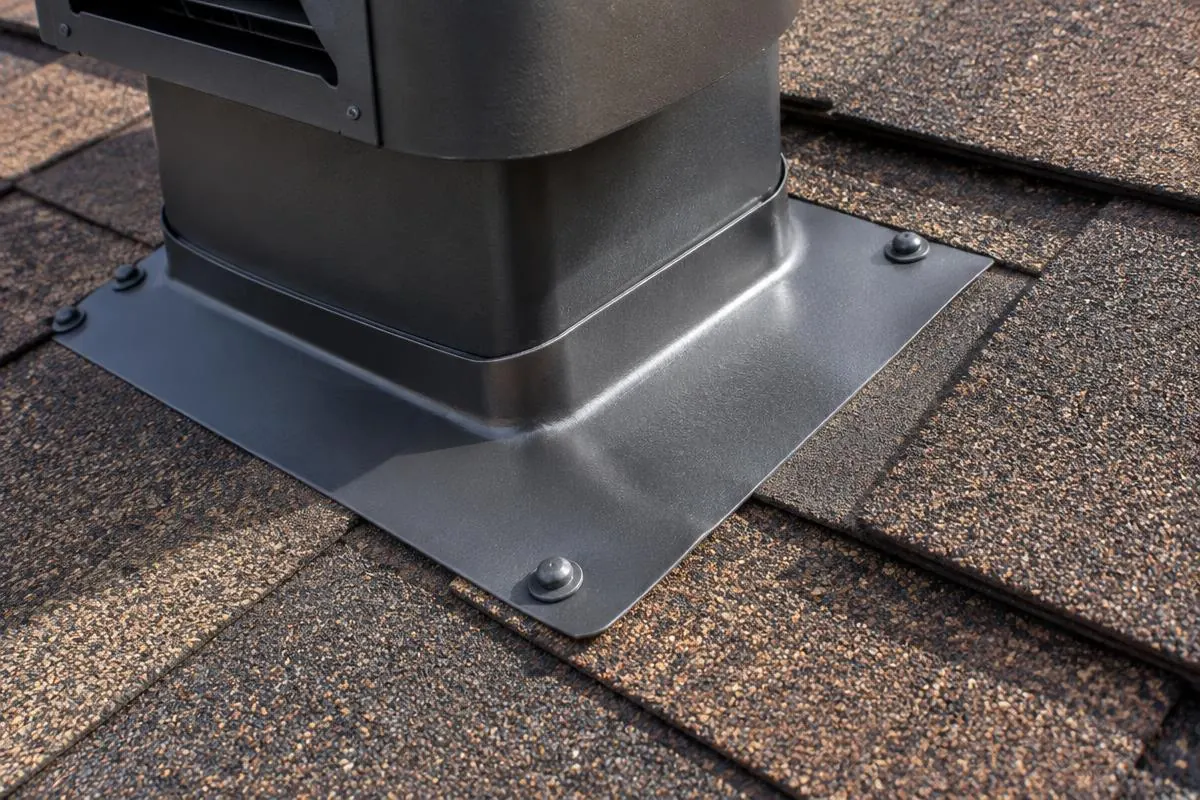
Ask about pipes and other openings
Use a separate entry for each pipe or vent that is being checked. Ask the roofer to name the part at issue and explain how it meets the roof. A repair around one opening does not mean all roof openings were inspected. The scope should tell you which ones are included.
If the work touches a vent's purpose or connection, ask who is responsible for that part. A roof repair and work on a pipe or exhaust system may be different tasks. Do not cap, block, or move a vent on your own to stop a leak. Ask the professional to explain the boundary of their work in words you can follow.
Tell us where the leak, wear, or damage needs attention.
Ask what a sealant will do
If a plan includes sealant, ask where it will be used and why it fits the detail. Ask whether the step is temporary or part of the planned final repair. A tube of sealant is not a complete scope. The plan still needs to name the cause under review, the parts affected, and the intended result.
Avoid a broad rule that all sealant is good or all sealant is bad. Product details differ. GAF warns in its pipe-flashing guidance that wrong sealant use can trap water. That warning is a reason to ask about the specific system. It is not a reason to remove old sealant, add new material, or try to remake the joint yourself.
Set the boundaries of the written plan
A useful flashing scope names the location, the material or system, and the work area. It explains which parts will be removed and which will stay. It should also say how the new work joins the roof and any wall or opening beside it. Ask for a sketch if words alone leave the work area unclear.
Add the tasks at each edge of the job. Who checks for wet or damaged backing? Who handles siding, masonry, or indoor finishes? What happens if the work cannot be completed as first planned? Ask how changes are priced and approved before the job starts. New findings should lead to a clear decision. They should not become a vague extra line at the end.
Try a one-joint scope check
Suppose a plan says "repair flashing by the back wall." Ask the roofer to mark that exact wall on a wide photo. Ask where the work starts and ends. Then ask who will put back the wall trim and the roof pieces beside it. These questions turn one vague line into a work area you can both point to.
If the roofer says the full extent is hidden, ask what can be set now. The plan can name the first step and the process for more work. It should not make unseen parts sound checked.
Who owns each edge
- 1Roof work
Name the flashing and adjoining roof area.
- 2Wall work
Name any trim or siding task.
- 3Hidden area
Assign the review and approval for unknown parts.
Compare a repair with a wider change
One roofer may propose a local repair. Another may want to replace a longer run of flashing or open more of the roof. Ask each to explain why. Did they see different things? Is one allowing for a hidden area? Does one scope include roof material that the other leaves out? These differences matter more than the shared word ‘flashing.’
Ask what evidence would support keeping the current parts. Then ask what evidence would rule that out. This gives you a fair way to compare the plans. You are not asking for a guarantee about every unseen part. You are asking for a reasoned link between the roof's condition and the size of the proposed job.
Keep the handoff clear when trades meet
Flashing work can sit at a boundary between tasks. Make a short list of who will do each one. If a wall must be opened, name who will open and close it. If chimney masonry needs review, state who will check it. If water has reached power gear indoors, that calls for qualified electrical help.
Ask whether one person will coordinate those steps or whether you must do so. Confirm the order before work begins. A roofer may need another trade's work done first, or the reverse. The right order depends on the actual project. A written handoff helps you avoid paying for finish work that later has to be opened again.
Review the finished joint with the record
At completion, compare the work photos with the agreed scope. Look for the area you discussed and the parts the plan said would change. Ask about any difference before the record is closed. Do not go onto the roof to make this check. Photos and a plain explanation should help you understand what was done.
Keep the final scope and any changes with the before images. If water returns, use that record to describe the new concern. Say which room is wet and when it happened. Do not assume the same joint is the cause without review. A clear history lets the next assessment build on facts rather than start from an untested guess.
Roof flashing repair in Peoria: the key steps

Read the full transcript
Roof flashing repair in Peoria.
Flashing helps manage water where roof parts meet.
Name the wall, valley, pipe, or edge that needs a check.
Ask where water should go at that joint.
Then ask which finding shows why the proposed work is needed.
A roof-to-wall job may involve more than roof parts.
Check who handles trim, siding, and any hidden findings.
Ask why each material fits the actual detail.
Do not treat added sealant as a complete repair plan.
Keep wide and close work photos with the final scope.
Clear records help if water shows up again.
Your questions, answered.
Is all roof flashing metal?
The right detail depends on the roof and opening. Ask the roofer to identify the whole system and the specific parts in the plan. Do not choose a patch material by color or appearance alone.
Does a leak near a wall prove flashing failed?
No. Its position helps guide a check, but the cause still needs evidence. Ask the professional to explain how the finding at the joint fits the water seen inside and what other areas were reviewed.
Can flashing be repaired without a new roof?
That may be possible. The answer depends on the joint, roof condition, and access to the parts involved. Ask what must be opened and how the repair will connect to the roof that stays.
Should a bid include new flashing at every opening?
Ask which openings were checked and why each proposed change is needed. A bid may cover one problem area or a wider project. The scope should state that choice clearly rather than leave the extent implied.
How do I know whether wall work is included?
Look for it in the written scope. Ask who removes and puts back any trim or siding, who checks the area behind it, and how any new finding will be approved. Have the answer recorded before work starts.