See the steps below to plan the right work for your roof.
A gap needs a closer look
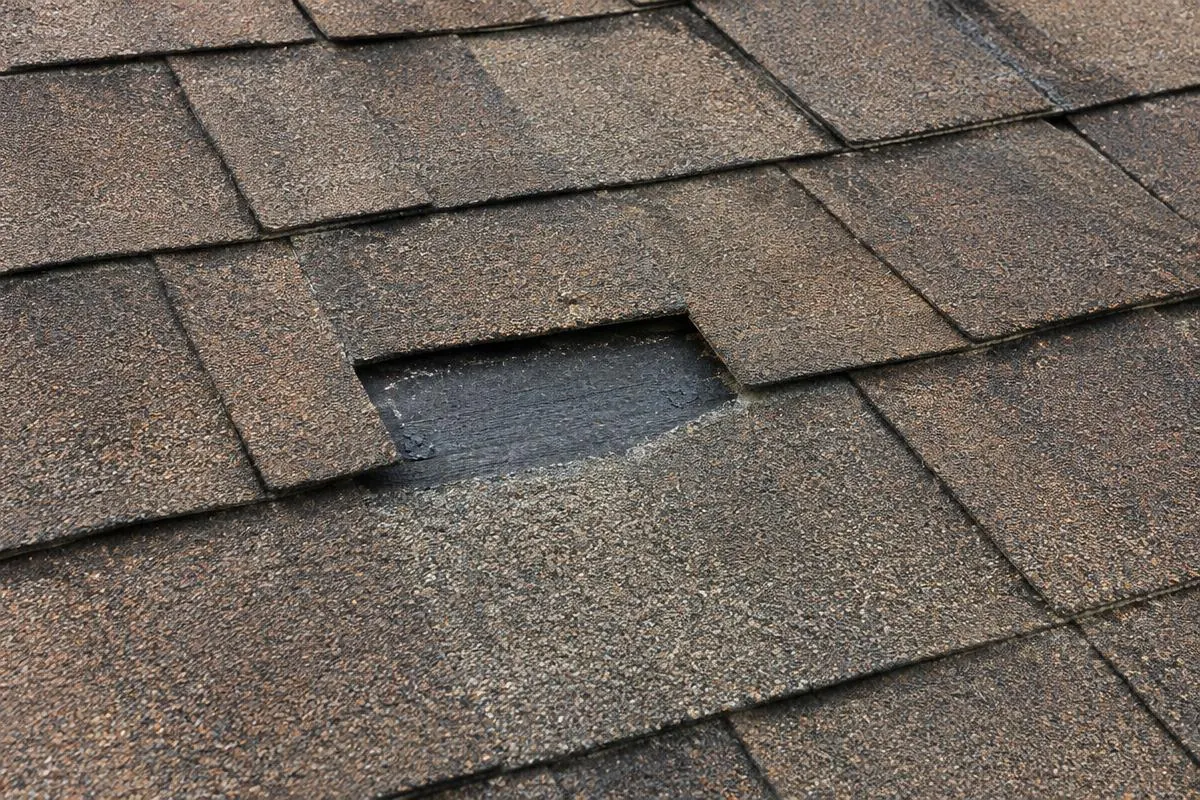
A missing, cracked, or curled shingle is a reason to ask for a roof check. It is not enough by itself to choose a full new roof. The useful question is whether sound work can be done in that spot without leaving weak parts around it. Ask the roofer to show the damage, check the nearby pieces, and explain the repair limits.
This page is about asphalt shingles. If your roof is wood, slate, tile, or metal, say so when you seek help. A photo may help a professional identify the material, but do not pull off a piece to find out. Use the records you have. A label on an old pack is useful only if it belongs to this roof.
Name what you can see
Use plain words in your first note. ‘There is a bare patch over the porch’ is a clear start. ‘The right corner looks raised’ is useful too. You do not need the name of a defect. Describe the shape, place, and change you can see. Let the roof assessment work out the cause.
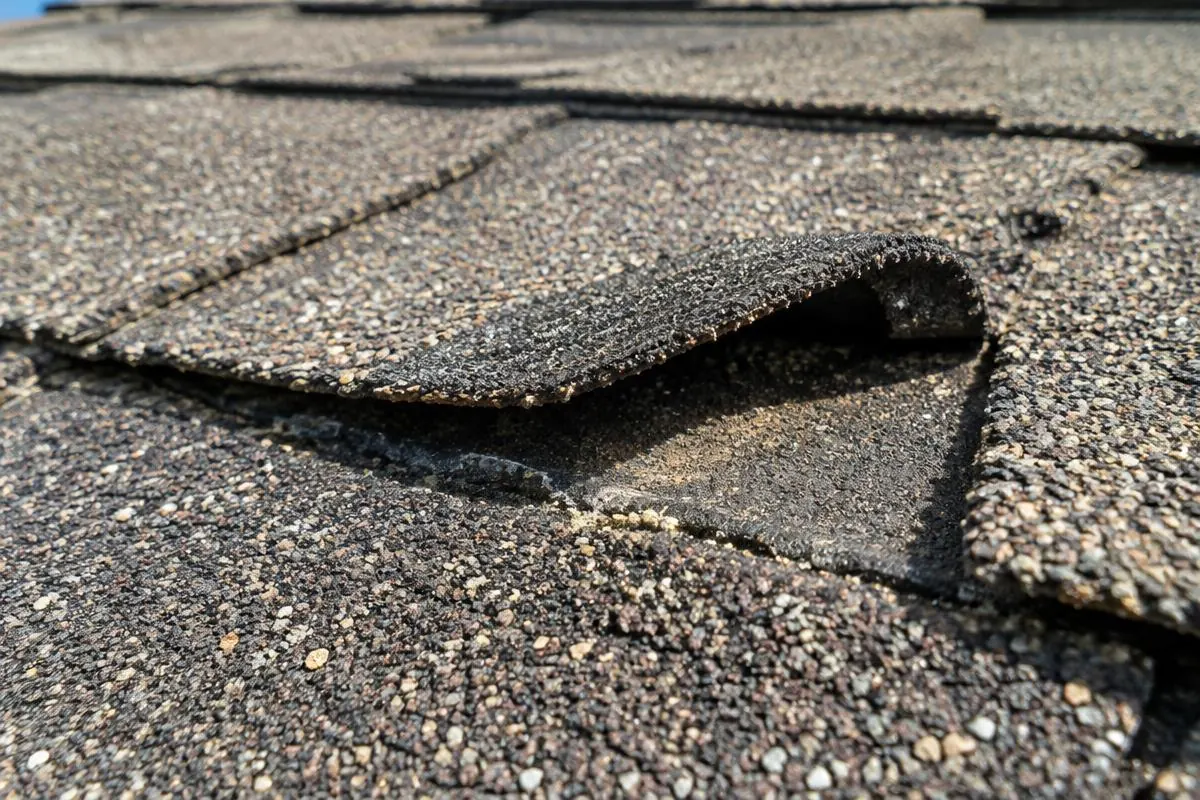
GAF lists missing, cracked, and curled shingles among signs to check after a storm. It also notes dark areas where granules have come off. These signs can help frame an inspection. They do not prove when damage happened or who is at fault. A mark first seen this week may have been there before. Keep ‘first seen’ and ‘first happened’ as two different facts.
Work from a clear ground view
Choose a dry, firm place where you can see the roof. Stay away from loose branches, wires, and falling material. Take one broad photo, then use zoom for a closer view. Do not stand on a chair, car, or ladder for a better angle. If you cannot see a part, note the gap in your record.
Try to name the roof face in a way the roofer can find. ‘Back slope above the deck’ is often clearer than a guess at a compass point. Include a fixed feature in the wide photo. A close image with no context may show the shingle but hide where it is. Keep both views so the two can be linked later.
What to note for each visible sign
Use the row that fits what you see. Add a photo if you can take one safely. These are inspection questions, not conclusions about the repair.
| Visible sign | Useful note | Question for the roofer |
|---|---|---|
| A missing section | Mark the roof face and nearby feature. | What is exposed, and what must be checked around it? |
| A split or crack | Record whether it is one spot or several. | Which pieces are damaged, and how was that confirmed? |
| A raised or curled edge | Take a view from safe ground. | What does the surrounding condition show? |
| A bare or dark patch | Save a photo without touching the roof. | Is material loss present, and what work does it need? |
Tell Us About Your Roof
Tell us what needs attention.
Build a damage map, not a diagnosis
Make a small sketch with one box for each roof face you can see. Mark the spots that look changed. Put a question mark where the view is blocked. If there are many spots, use letters so your notes stay clear. A photo named ‘back roof B’ can match the B on your plan.
Keep the map simple. Its job is to help you ask whether all the noted spots were checked. Do not use it to count hidden damage, measure the roof, or set the work area. A roofer may find that one marked patch is several pieces. They may also find that what looked like a gap was a shadow. Update the record when better evidence arrives.
Describe the sign
- 1Gap or split
Note its place without assigning a cause.
- 2Raised edge
Ask about sealing and surrounding condition.
- 3Bare surface
Ask what the worn area means for this roof.
Ask what makes a local repair work
A repair plan should deal with more than the piece you noticed. Ask about the condition of the shingles around it. Ask how the new piece will fit the roof system and how the surrounding work will be left sound. These are questions for the person doing the repair, not a set of steps for you to carry out.
GAF's storm-damage bulletin says individual shingles can sometimes be replaced, but nearby damage can be hard to assess. It also discusses cases where a roof face may be replaced. That does not make either choice right for your house. Ask which findings support the proposed scale of work. One photo of one torn piece cannot answer every question about the rest of the slope.
Keep appearance and roof condition separate
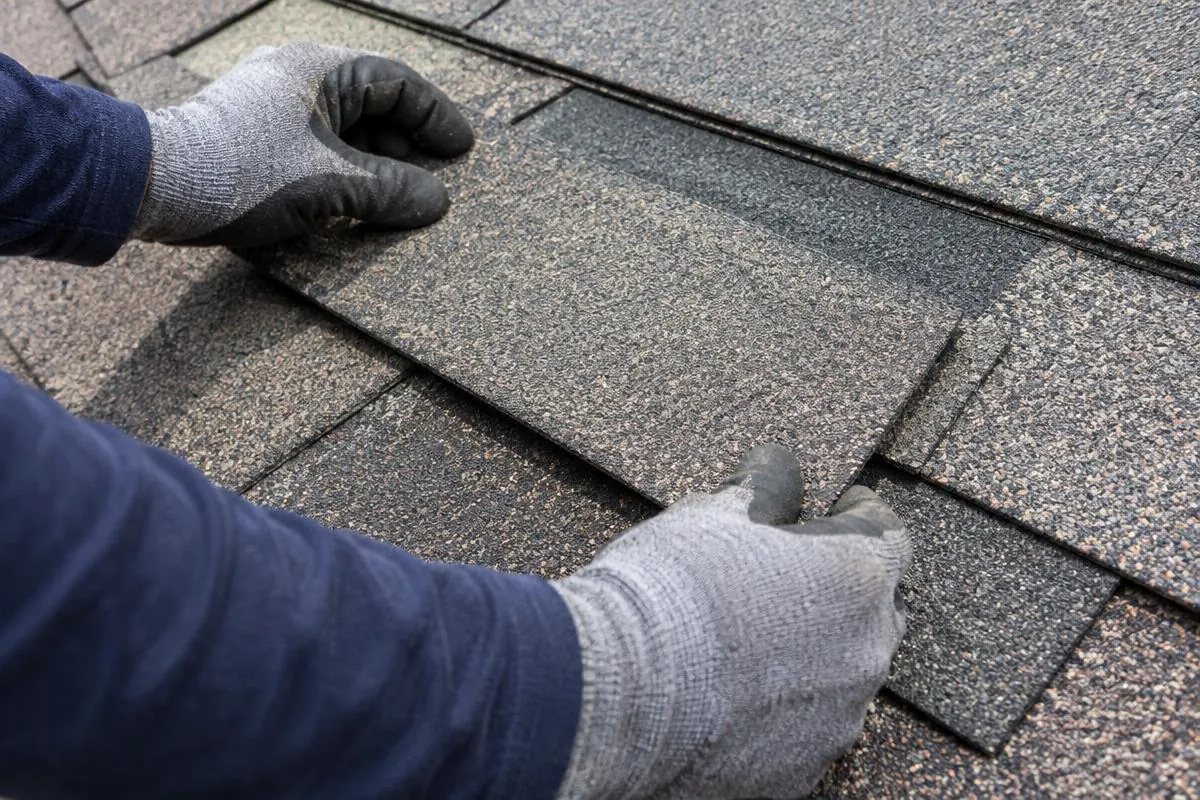
A new piece may not look like the old pieces beside it. Ask to see the proposed product name and color before work starts. If an exact match is not available, ask how that will be handled. The plan should be clear about the look you can expect as well as the work needed to keep water out.
A color concern and a damage concern are not the same question. Ask which part of a recommendation addresses each one. You may care about both, but the reasons should stay clear. Do not accept an exact-match promise based only on a screen image. Product records and a real sample can help you discuss the choice with the person who will supply it.
Use the old roof records with care
Look for a bill, product name, date, and any past repair photos. Share these with the roofer. If you have leftover shingles, mention them without assuming they are fit for use. Ask the roofer to check the product and its condition. Storage history may be unknown, and an old label does not settle every fit question.
If the age is a guess, call it a guess. If one roof face was replaced at a different time, say that too. A single age for the whole roof may hide useful details. Your records can help the roofer ask better questions. They should not replace a review of the roof as it stands now.
Tell us where the leak, wear, or damage needs attention.
Read the scope by location and extent
Look for a clear work area in the written plan. It might name a group of pieces, a roof face, or a larger part of the roof. Ask why those boundaries were chosen. Ask how the plan deals with the edge of the repair, where new work meets material that will remain. That boundary is a key part of the decision.
Ask which related parts are included. A scope might involve ridge pieces, edges, vents, or nearby flashing as well as field shingles. Have the roofer name them rather than hide them in ‘as needed.’ Find out how hidden damage will be recorded and how you will approve changes. A clear starting scope makes an unexpected finding easier to discuss.
Compare repair evidence before cost
Two bids may use the word ‘repair’ but include very different work. Put the proposed areas side by side. Check the product names, removal work, parts left in place, and follow-up terms. If one bid is for a few pieces and one is for a whole roof face, ask each roofer to explain the evidence behind that choice.
Ask the same key question of each person: ‘What would make this repair unsuitable?’ A useful answer could point to a finding that still needs checking. That is more helpful than a firm promise with no stated basis. You are looking for a plan you can understand, including what remains unknown and how the next decision will be made.
Repair boundary
- 1Small area
Ask where sound roof begins.
- 2Wider face
Ask which findings support a larger scope.
- 3Same evidence
Compare the boundaries, not just totals.
Avoid a patch that only hides the mark
Do not judge the work by whether the bare spot has been made the same color. Ask what was removed and replaced, what stayed, and how the finished repair was checked. GAF states that adding loose granules to a damaged shingle with asphalt cement is not a lasting repair for that damage. A surface that looks darker is not, by itself, proof of sound work.
Save before and after photos with the scope. Ask for a wide view as well as close images. If the job changed after it began, keep the approved change with those records. You should be able to tell what the completed job covered without relying on a memory of a quick talk in the yard.
Decide what needs attention next
If there is water inside as well as visible shingle damage, say so at the start. The wet spot needs its own review. Do not assume the visible gap is the only cause. If there is a tree on the roof, loose power line, or other immediate hazard, keep clear and seek the right urgent help before collecting more photos.
If there is no indoor water, that fact is worth noting, but it does not settle the roof's condition. Ask for a check based on what you can see and what is missing from the view. A useful next step ends with clearer evidence and a defined work plan. It does not depend on making the worst guess or the most hopeful one.
Keep a short shingle file
Save your ground photos, roof sketch, product records, and repair scope together. Add the date of work and the contact for questions. If you notice another change, take a photo from the same place and note the date. This gives the roofer a fair basis to compare the views.
For a Peoria-area property, share the real location with the professional you choose. Ask them to confirm that the project fits their work and any local review needs. Confirm the site visit and scope with the roofer before work starts. Your aim is a clear answer for the actual roof, based on its material, condition, and findings rather than a broad label.
Shingle roof repair in Peoria: the key steps
Read the full transcript
Shingle roof repair in Peoria.
A missing or curled shingle is a reason to ask for a check.
It does not set the repair size.
Take a broad photo from safe ground.
Add a closer view with zoom so the roof face stays clear.
Ask how the nearby shingles were checked.
A local repair must account for more than the gap you noticed.
Read the proposed product and work area.
Ask about both fit and the look of the finished patch.
Keep the scope and work photos.
They show what was done if you need to ask a later question.
Your questions, answered.
Does one missing shingle mean I need a new roof?
Not by itself. Ask for an assessment of that spot and the nearby roof. The plan should explain why a small repair, one roof face, or wider work is supported by what the roofer finds.
Can the new shingles match the old ones?
Ask the roofer to identify the existing product and show what is available. Discuss both fit and color. Do not assume that the same color name will create an exact visual match with a roof that has been in place for years.
Should I save a piece that fell into the yard?
Tell the roofer you found it and take a photo where it is safe to do so. Do not search near wires or loose debris for a sample. A piece in the yard may not show the state of the shingles still on the roof.
Is a shingle repair always just a few new pieces?
No. Ask which nearby roof parts the scope includes and which it excludes. The work may need more than the visible piece. The written plan should explain that need rather than leave you to guess.
What if the roof looks fine from the ground?
That is the limit of your view, not proof of the whole roof. If you have a concern, share the reason and ask what can be checked. Do not climb to get the missing evidence yourself.