See the steps below to plan the right work for your roof.
Gutter Repair in Peoria
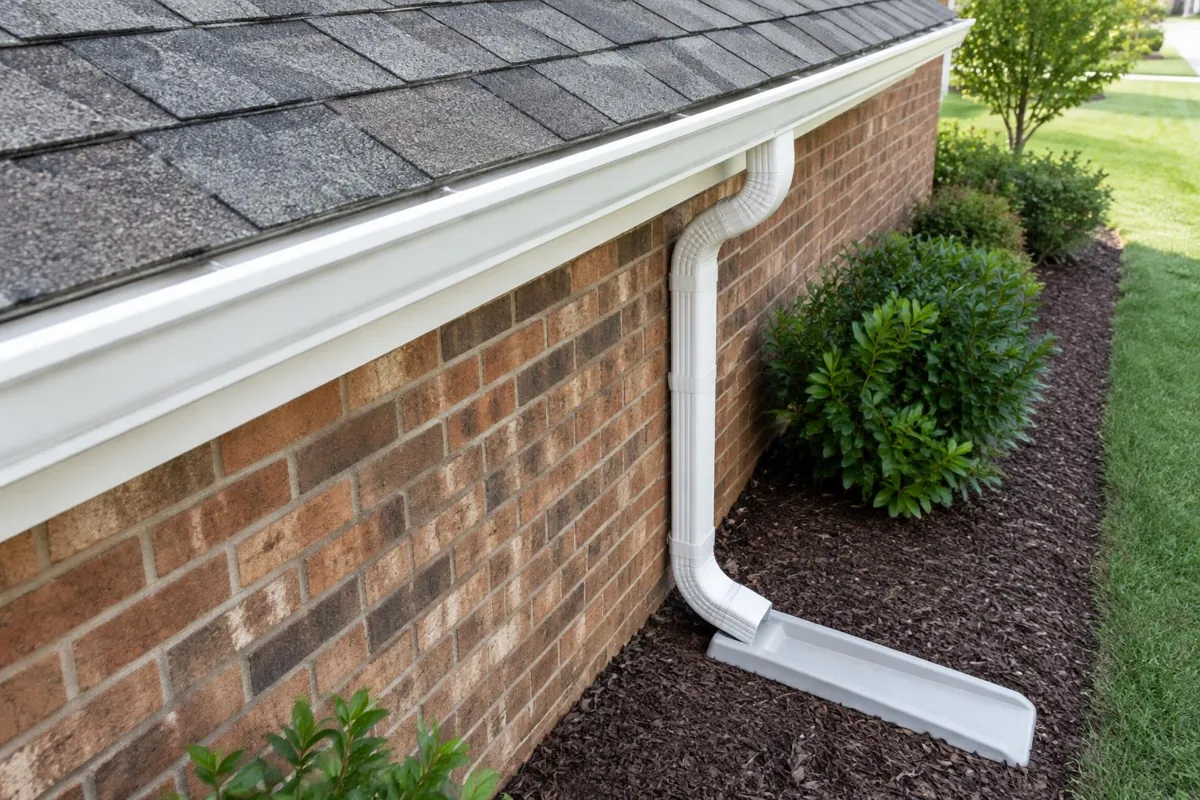
A gutter should catch water at the roof edge and guide it to a downspout. From there, water needs a clear route away from the home. A fault at any point can cause drips, spills, or wet trim. The right fix treats that fault, not just the spot where water lands.
Start with what you can see from the ground. Note where water spills, when it starts, and whether the gutter holds water after rain ends. These clues help a roofer choose what to check first. They also help separate a gutter leak from water that enters through the roof above it.
Watch the Flow From a Safe Spot
Use a dry, firm spot well away from falling water to watch the roof edge. Do not stand under loose trim or a sagging gutter. Stay indoors if it is not safe outside. A photo through a window can still show which corner spills and which downspout has little or no flow.
You do not need to climb a ladder or reach into the gutter. Use your phone to zoom in from the ground. Take one wide view of the whole run. Then take one closer view of the fault. Note which wall is shown so a roofer can match each photo to the home.
Leaks at Seams and End Caps
A drip from a seam may point to a failed seal or a joint that has moved. An end cap can leak in much the same way. A drip near a joint does not identify the exact fault by itself. Ask a roofer to trace the drip rather than assume its source is clear.
A sound joint may suit resealing with a compatible product and the required surface prep. A bent or split joint may need a new part. If the run shifts when it fills, sealing alone may not last. The repair scope should address what made the joint open in the first place.
Low Spots and Gutter Pitch
Pitch is the slight slope that leads water toward an outlet. If part of a gutter dips, water may sit there instead of moving on. From the ground, you may see a low edge or a stain near one point. Standing water needs a closer check, since a clog can cause it too.
A roofer can check the slope and decide if the run can be reset. The goal is steady flow, not a steep tilt that looks odd or misses roof runoff. Ask whether the change will affect the outlet height, nearby joints, or downspout fit. Those parts need to work as one path.
Tell Us About Your Roof
Tell us what needs attention.
Loose Hangers and a Sagging Run
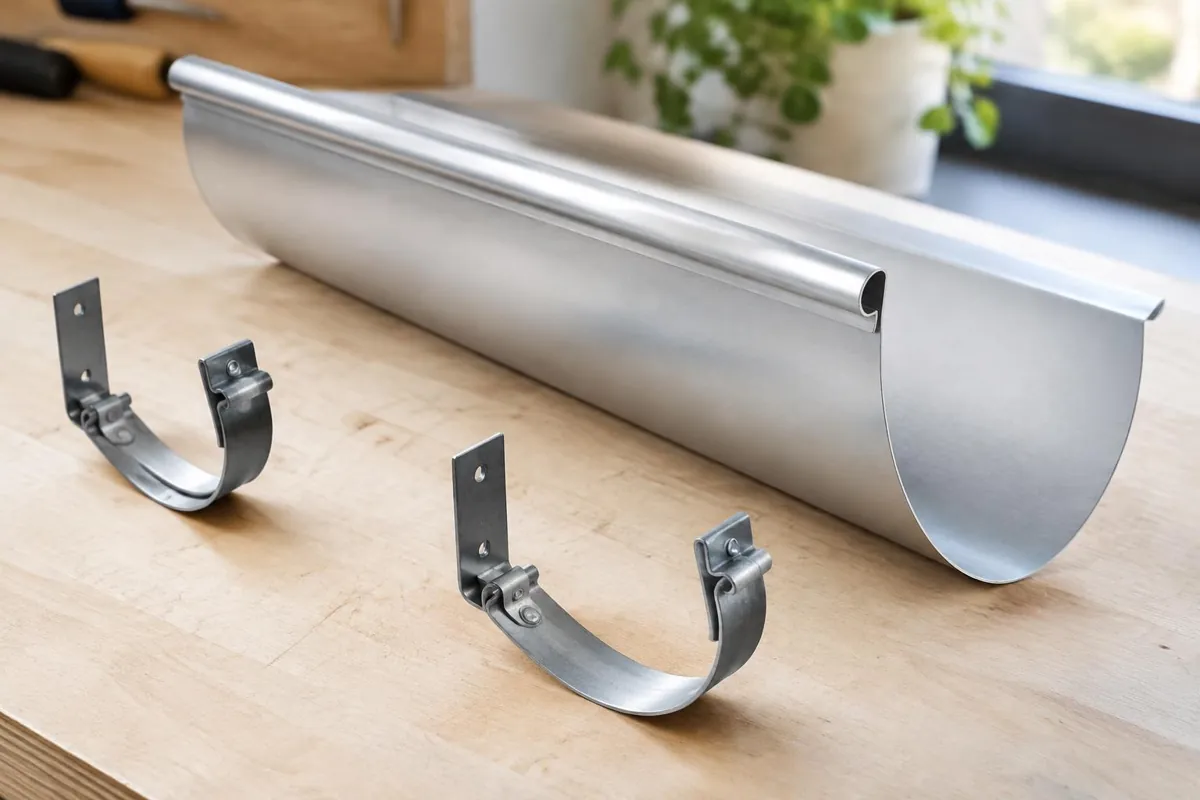
Hangers hold a gutter in place and help keep its shape. When they loosen, the front edge may dip or pull away from the home. That can change both the slope and the way runoff enters. Ask for a check of the hangers and their backing, as well as the drip point.
The fix may involve new hangers, better spacing, or sound points for the fasteners. Ask what the fasteners will grip. Tightening them into weak wood does not solve the support issue. A roofer should check the backing before treating a sag as a simple loose part that just needs to be pushed up.
Fascia and Water Behind the Gutter
Fascia is the trim board along the roof edge, often behind the gutter. Water stains, peeling paint, or gaps there can signal trouble. Yet those signs do not prove the gutter is the only cause. Water may come from a poor edge detail above it or from a gutter that backs up.
Ask a roofer to check the fascia, gutter position, and roof edge together. If wood is soft, the scope may need to include that repair before the gutter is secured. Get a clear note on what can be seen now and what may only be found once a loose section is moved.
Downspouts Need a Clear Path
A gutter can look sound and still overflow if its downspout cannot carry water away. Debris may block the outlet, an elbow, or the base of the pipe. Watch whether water leaves the bottom during rain. Little flow at the base while the gutter spills is a useful clue, not a firm diagnosis.
A roofer can check for clogs, crushed parts, loose straps, and joints that pull apart. The scope should name the parts that need work. If the outlet itself is too limited for the flow it receives, clearing the pipe may not be enough. Ask how that concern will be checked before parts change.
Where the Water Goes Next
The route does not end at the downspout base. Water that pools beside the wall or crosses a walk still needs a better path. From the ground, note where the flow ends and where puddles form. Share views of the yard slope and nearby paths, not just close shots of the downspout.
A repair plan may include a new elbow or a change to the surface outlet route. Keep that route clear of doors and walking paths. If a downspout feeds a buried drain, ask who will check that drain. A clear gutter cannot fix a blocked line beneath the yard on its own.
Trace the whole runoff path
- 1Roof edge
Check how roof water enters the gutter.
- 2Gutter run
Check hangers, slope, seams, and obstructions.
- 3Downspout
Check that the outlet and pipe can pass the water.
- 4Final outlet
Check where the water ends, away from the building as the site allows.
Tell us where the leak, wear, or damage needs attention.
Read the Pattern of Overflow
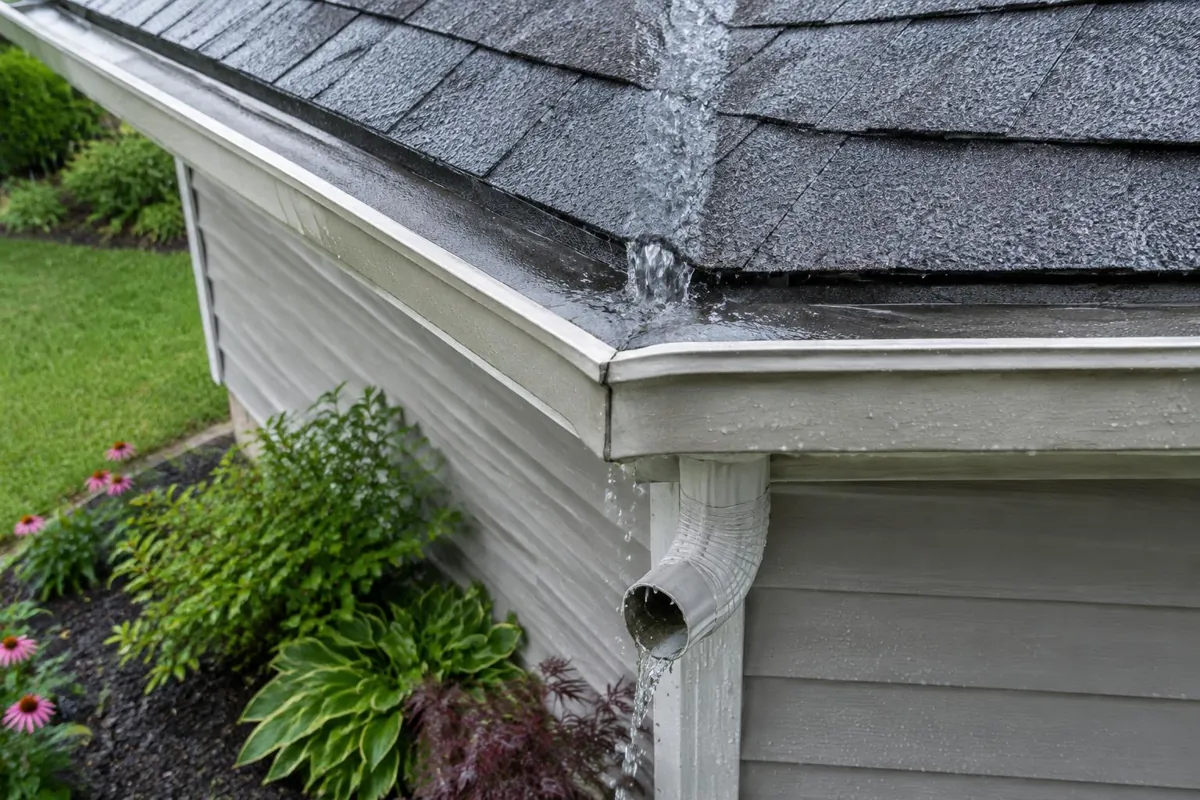
One small spill point can mean something quite different from water pouring over a whole run. A local spill may link to a clog, dip, or stream from a roof valley. A broad spill may call for a wider flow check. Tell a roofer whether one spot fails first or all spots spill together.
Cleaning may solve a debris clog, but it will not reset a low run or mend a loose joint. Nor does every overflow mean you need larger gutters. Ask for the cause to be shown in plain terms. A useful plan explains why each proposed change should help water move through the system.
Gutter Repair or a Roof Leak Check?
Wet fascia and a ceiling stain should not be treated as the same problem without a check. A gutter fault may send water behind the edge, but roof leaks can begin elsewhere. Water can travel before it shows inside. Tell a roofer about both indoor and outdoor signs, even if they seem far apart.
GAF explains common repair parts and leak causes. These pages give roof repair context. For gutter joints and backing, use the Amerimax guide and the Building America gutter source. They do not identify the fault at your home. Ask which clues point to a gutter repair and which call for a roof leak check before you approve a scope.
Separate the two water questions
- 1Outdoor spill
Record the spill point from firm ground.
- 2Indoor stain
Ask for a roof-entry check; a gutter leak does not prove the stain’s cause.
- 3Linked work
Name who handles roof joints, gutter parts, backing, and final flow checks.
Repair One Part or Replace a Run?
A small fault does not always call for a full new gutter system. One leaking cap, loose elbow, or short bent section may have a focused fix. That choice makes sense when the nearby parts are sound and the flow path works. Ask what can stay and why it is worth keeping.
A run with several splits, deep bends, or poor support may need more than spot repairs. Compare the work needed to restore it with the scope for a new run. Keep roof work separate in the quote unless a linked fault is found. This makes the choice easier to weigh without mixing unlike tasks.
What Changes the Cost
The cost depends on the fault, the length of gutter involved, and how hard the edge is to reach safely. Joint work differs from resetting a full run. New elbows differ from fascia repair. The gutter material, shape, and fit of new parts can also affect the work and the final quote.
Ask for a written scope with labor, parts, and removal of old pieces made clear. Find out whether cleaning, flow checks, fascia work, and outlet changes are included or separate. If hidden damage could change the price, ask how added work will be priced and approved before any extra repair work starts.
Make the Assessment Easy to Use
When you seek an assessment, share the spill location, photos, and any signs indoors. State whether the issue happens at a seam, corner, or whole run. Mention a buried outlet if one is present. You do not need to name the failed part. A clear account of what you see is enough to start.
Ask a roofer to explain the cause, the proposed fix, and how the result will be checked. A flow check can help show whether water reaches the outlet without leaks or trapped pools. Request photos of spots you cannot see from the ground. Keep those with the written scope for a clear record.
Hiring Checks and Permit Questions
For a roofer, use the Illinois IDFPR license lookup as a hiring check. Match the name you find with the name on the quote. Ask who will do the work and who will handle any linked roof repair. Confirm the license is active before you approve any work.
Permit needs should be checked against the actual scope and the place where the home sits. For work within Peoria, start with the official building permit page. Do not assume a gutter-only fix and work on roof-edge wood have the same rules. Ask who will confirm and handle any needed permit.
Peoria Area Planning and Your Next Step
This page focuses on the Peoria, Illinois market. The planning circle extends 15 statute miles around East Peoria City Hall. That landmark sets the center of the circle; it is not a site office. Metamora falls only partly within the circle. A town name alone does not settle whether an address fits that area.
Your next step is to gather a few safe views and ask a roofer for a focused assessment. Lead with the water path: where runoff enters, where it spills, and where it ends. Ask for separate findings on gutters and roof entry if both are in doubt. That gives you a sound basis for choosing repairs.
Gutter Repair in Peoria: the key steps
Read the full transcript
Gutter Repair in Peoria.
Gutter repair starts by tracing roof runoff from
the edge through the downspout to its final outlet.
Ground level photos can show gutter spill points without
climbing ladders or standing beneath loose roof trim.
Loose gutter hangers can change the slope, strain joints,
and let water collect far from the outlet.
An indoor water stain needs a roof entry check,
even when a nearby gutter also leaks outside.
A clear gutter repair scope names failed parts, needed changes,
and how a roofer will check flow.
Your questions, answered.
Does a leaking gutter always need new sealant?
No. Sealant may help a sound joint, but it cannot correct a sag, split, or weak support. Water may also drip from a seam after traveling from another spot. Ask a roofer to trace the leak and check the joint before choosing a repair.
Why does my gutter overflow after it has been cleaned?
The run may have a low spot, the outlet may still be blocked, or a downspout may be crushed. Roof runoff may also reach one point faster than it can drain. Ask for a flow and slope check rather than more cleaning with no clear cause.
Can a gutter problem cause water stains indoors?
It can play a part if backed-up water finds a path behind the roof edge. But an indoor stain does not prove a gutter fault. A roofer should check for roof entry points too, then explain how the findings link to the stain you see.
What should I do if a gutter is pulling away?
Keep people away from the space below it and seek a professional assessment. Do not pull on the gutter or climb up to push it back. Share a ground-level photo if safe. Ask for the hangers, fasteners, and wood behind the gutter to be checked.
Should a gutter quote include the downspout outlet?
It should make clear whether the outlet route is part of the work. A repaired gutter can still leave water beside the home if the downspout ends in a poor spot. Ask where water will go and whether a buried drain needs a separate check.