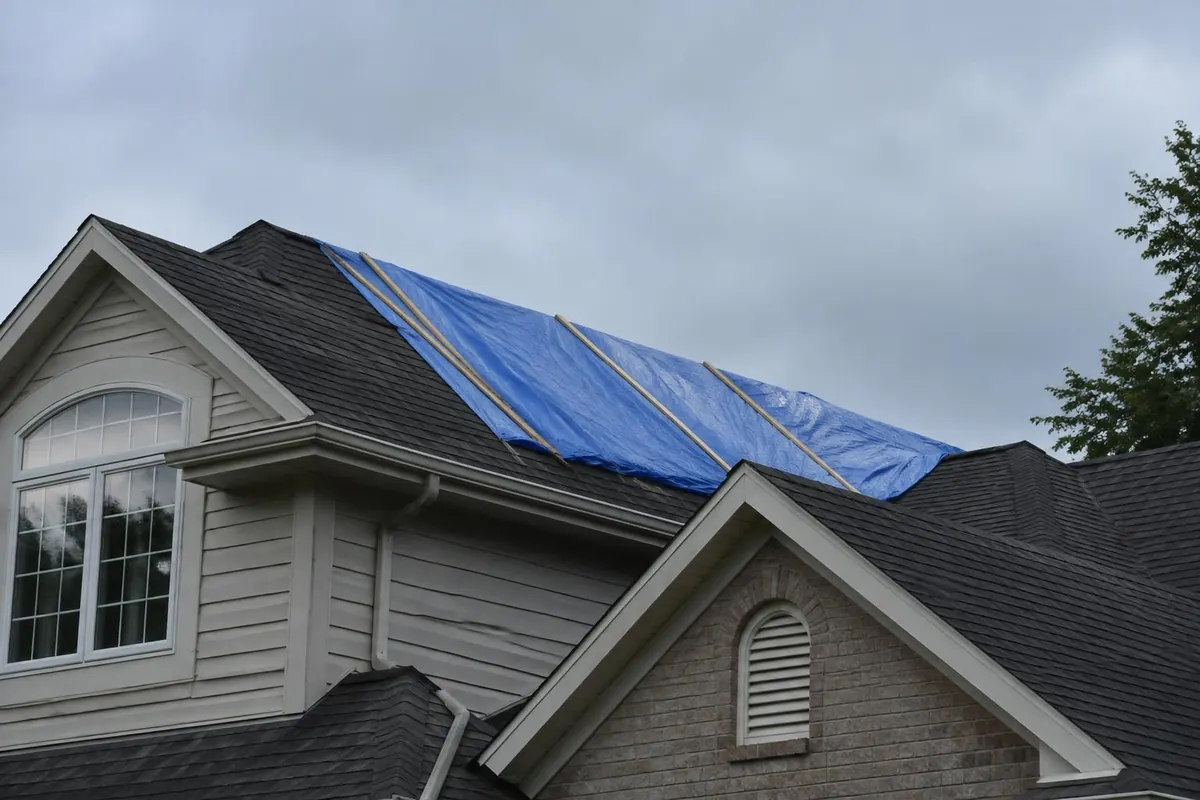
Why a quick cover needs a real next step
Sometimes part of your roof is open. Water may be coming in. You may need a quick cover first. A real fix comes later. Ask for a clear plan. It should say what gets covered, how the area gets checked, and what happens next.
Keep safety apart from scheduling. You may see a collapse risk. You may see a downed power line, fire, or water near electrical gear. If so, stay away. Call for emergency or utility help right away. Do not wait on a roofing form to fix a true hazard.

Safe access must come before any cover goes up
OSHA has rules on roof tarping. Workers must check roof stability, electrical risks, and fall safety first. The rules also say: do not put up a tarp during a storm. Ask about this safe work plan. No one should climb a damaged roof in bad weather.
Tell your Peoria crew about hazards you can see. This can be a tree on the roof. It can be loose pieces, damaged lines, or a sagging spot. Report these from a safe spot. You do not need to go near the damage. You do not need to move debris or test the roof deck.
Temporary roof work handoff
Stays on this page only. Nothing is sent or saved.
Spell out the area and the limits of the quick fix
The written plan should name the roof section being covered. It should say what the cover is meant to do. Ask if openings, nearby flashing, and water flow near the cover are checked too. Avoid a vague note that just says tarp roof.
Also ask what could not be reached safely. A quick cover has one job. It is not proof that your home is safe to live in. Any structure worry needs its own check. Keep these limits clear. No one should mistake a quick fix for a full roof check.
From temporary cover to finished roof
- Hazard and access review
- Written temporary scope
- Agreed check date
- Permanent repair assessment
- Cover removal and final repair
Dates come from the user or contractor; no response-time promise.
Plan how the cover attaches and how it comes off later
Ask the crew how the cover will attach to your roof. Ask how it will come off later too. This page will not name one exact nailing method. The right way depends on your roof. It depends on the damage and on safe work conditions.
Ask if the quick work may leave spots that need fixing later. Ask if that fix is already included. Ask for photos of the covered area and its edges, taken safely. A different crew may do the final repair. This record helps them see what changed during the emergency visit.
Request temporary roof protection in Peoria
Tell us what needs attention.
Set a check-in date instead of guessing how long it lasts
No one can promise how many days a quick cover will hold. Ask the crew when they will check it, what to watch for, and who to call if a leak returns. Write down the date you agree on.
The U.S. Army Corps of Engineers calls this kind of cover temporary roof sheeting. It protects a home while the real repair gets planned. That is the same idea here. It does not mean a government program covers your home. The lasting fix still needs a check, a plan, and a step to remove the cover.
Know the cost of the quick fix before you say yes
Ask which costs cover access, materials, and putting the cover up. Ask which costs cover later checks and taking it down. If a return visit costs extra, ask to hear that cost up front. Keep tree removal, structure work, or drying out your home separate. These should only count if the quote clearly says so.
You may plan to use insurance. If so, save your photos and receipts. Ask your insurer what it needs from you. The Illinois Department of Insurance gives tips on disaster claims, including keeping good records. Do not assume every quick-fix cost gets paid back. Ask the crew how this work fits your policy and keep their answer with your other papers.
Build your own quick-fix record sheet
This worksheet notes the opening you saw, if it is still leaking, known hazards, and any quick work planned or done. It leaves room for a check-in date and the next step in the real repair. No date is made up for you.
The sheet has separate spots for the quick cover, open questions, and the lasting repair. If you pick a hazard, a safety message shows first. If you leave the date blank, the sheet asks you to get one. It will not book anything for you. Copy it for your own files. Use your pick in the request form.
Keep watching until the roof gets its real repair
After the quick cover goes up, keep watching for trouble. Check from inside or from the ground. Look for new water or a loose cover. Tell your contractor about any changes. Use the way you both agreed on to stay in touch. Do not climb up to stretch, patch, or weigh down the cover yourself.
Before the real repair starts, check its plan against your open items. Confirm who takes off the cover. Confirm who fixes any spots it left behind. When the job ends, save the final photos and bill. Keep them apart from the quick-fix bill. Start here when a quick cover is your urgent need. Use the emergency roof repair page for a fuller damage check.
Your questions, answered
Is a tarp the same thing as a roof repair?
No. It is only a quick weather cover. The lasting repair may need other materials. It may need more access and a check of hidden spots. Ask for a written next step. This way your covered roof will not sit unfinished.
Can a tarp go up while a storm is still happening?
Safety comes first. OSHA says not to install a tarp during a storm. Describe the damage from a safe spot. Let trained people decide when roof work can safely begin.
How long can a quick cover stay on my roof?
Use your crew's written check-in plan made for your roof and weather. Do not count on one set number of days. Ask who will check it. Ask what to do if water comes back before the real repair.
What should the real repair quote include?
Look for cover removal and a check of the exposed area. Look for repair of spots the cover used. Look for the final roof work too. Ask which parts are included. Ask which parts need a new decision once the cover comes off.