See the steps below to plan the right work for your roof.
Flat Roof Repair in Peoria
A flat roof has a slight slope that helps water reach a drain or edge. When that path fails, water can sit near a weak seam or small hole. The best repair starts with the cause. Ask a roofer to check the leak point. Ask about the path of the water and the base beneath the roof sheet.
A small leak does not always mean the whole roof must go. A sound roof may need a local patch, a seam repair, or work at a drain. But a patch on wet or loose layers may not last. The scope should match what the roofer finds, with clear reasons for each part of the work.
Name the Roof System First
The top of a low-slope roof may look like one plain sheet. Yet TPO, EPDM, and modified bitumen need different repair methods. Color alone will not tell you which roof you have. Old bills, roof plans, or product labels can help. Share those records with a roofer before anyone picks a patch or seam product for the job.
Ask the roofer to name the roof type in the quote. If more than one roof layer is present, ask which layer is being fixed. A past patch may use a different material from the main roof. That mix needs a close look. The new repair must bond to the surface that is there, not an assumed one.
TPO Needs Sound Welded Seams
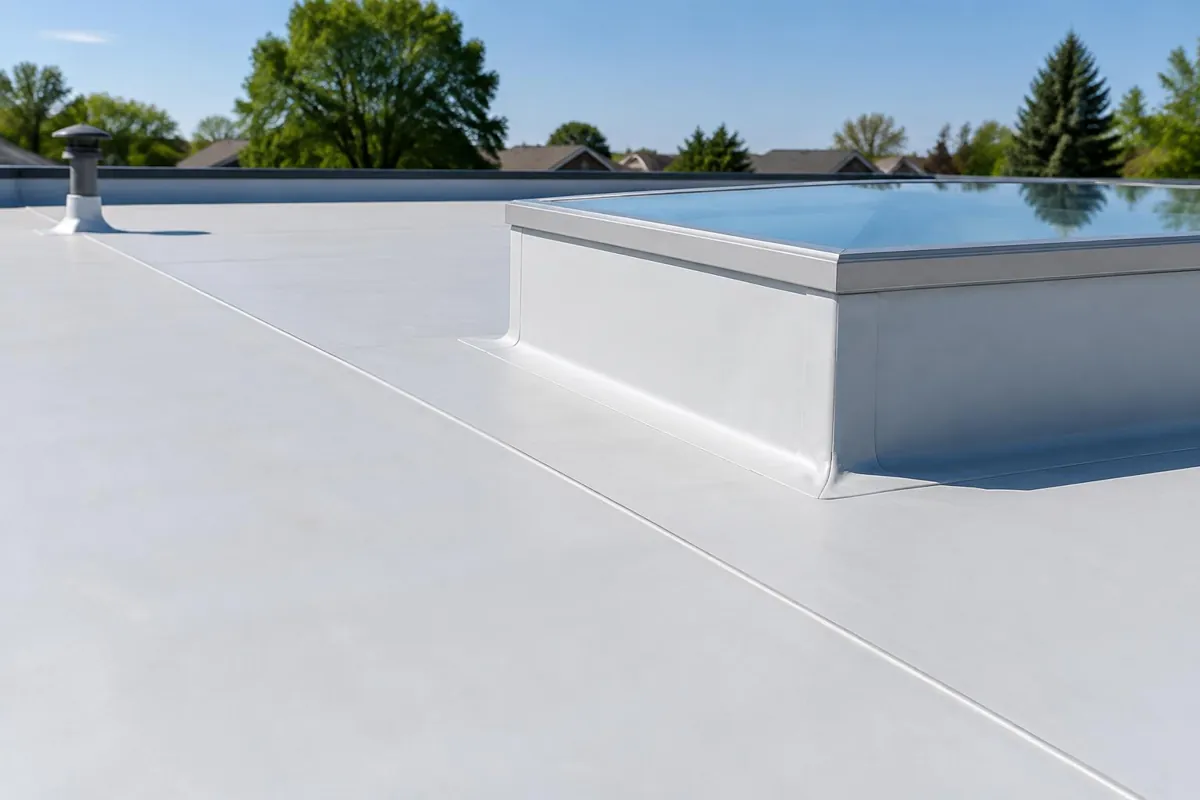
TPO is a thermoplastic roof sheet. Its seams are joined with heat, which welds the sheets together. An open seam can let water below the roof sheet. A roofer should check the seam bond and the sheet near it. Dirt, wear, or an old patch can affect how a new weld will hold over time.
A TPO repair may use a matching patch with heat-welded edges. The surface must be fit for that work, and the weld needs to be checked. Smearing a general roof cement over the gap is not the same repair. Ask how the roofer will prep the sheet and join the patch. Ask how they will confirm a sound bond at the edges.
Match the seam to the system
- 1Name the roof
Use product records and a roofer’s check; color alone is not enough.
- 2TPO seam
Use the system’s heat-weld repair method and check the bond.
- 3EPDM seam
Use compatible adhesive or tape with the required prep.
- 4Modified bitumen
Match the sheet and approved repair method; do not swap products.
EPDM Needs a Compatible Bond
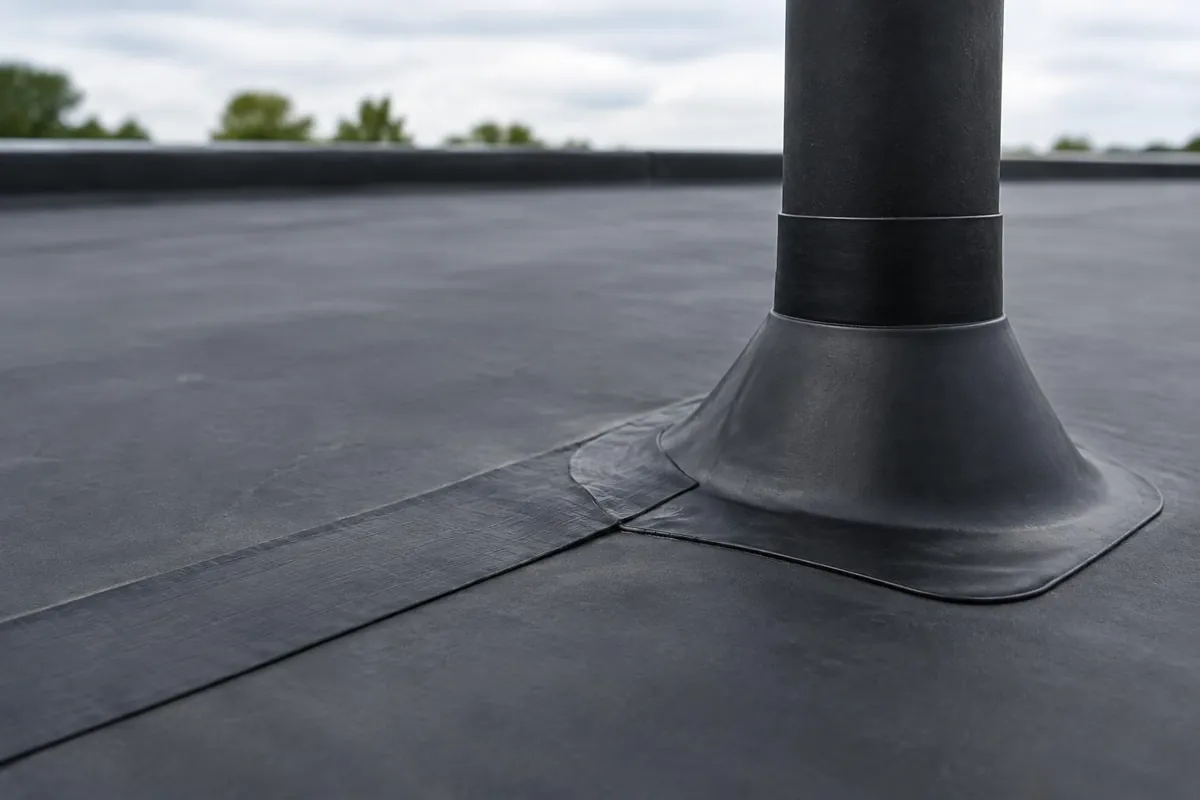
EPDM is a rubber roof sheet. Its seams and patches use compatible adhesive or tape, with the prep called for by the product maker. It is not joined like a TPO heat weld. Open seam edges or failed patches may let water in. Wrinkles need a closer check. A roofer should check the rubber and the bond at the leak area.
The repair may need cleaning, primer, seam tape, or a formed patch for a corner or pipe. These parts must suit the EPDM system. A product that sticks at first may still be wrong for the rubber. Ask for the patch type and prep steps in writing. Ask how the roofer will treat any old repair beneath it.
Tell Us About Your Roof
Tell us what needs attention.
Check Modified Bitumen Layers
Modified bitumen is an asphalt-based roof system made with modified asphalt sheets. Its top may have a grainy surface, a smooth finish, or another approved cover. Splits, loose laps, and lifted edges can be leak points. A roofer needs to check the sheet type. They should also check how it was laid. Only then should they choose a repair that fits the roof already in place.
Some repairs need a matching patch set with a system-approved method. Heat, cold adhesive, or self-stick products are not choices to swap at will. The roof design and site risks matter. Ask how loose material will be removed and how the new patch will seal at its edges. A thick smear alone may leave a failed lap below.
Trace Leaks Beyond the Ceiling Stain
A ceiling stain shows where water came into the room, not always where it entered the roof. Water can move along a deck, pipe, or roof layer first. Note which room is wet and when drips appear. From a safe floor, take photos of the stain and nearby walls. Do not cut into a sagging ceiling to trace it.
Roof seams, wall joints, pipe boots, and drain edges all deserve a check. The roofer should link the indoor signs to likely entry points rather than patch straight above the stain. GAF's roof leak repair page gives background on leak causes. Use that context to ask focused questions, not to assume your leak has the same source as another roof.
Clear the Water Path at Drains
A drain can fail in two ways. It may not pass water, or its joint with the roof may leak. Both faults can happen at once. Ask a roofer to check the drain bowl, roof seal, and nearby sheet. A blocked line may also need a drain specialist. A roof patch will not clear a clog down the pipe.
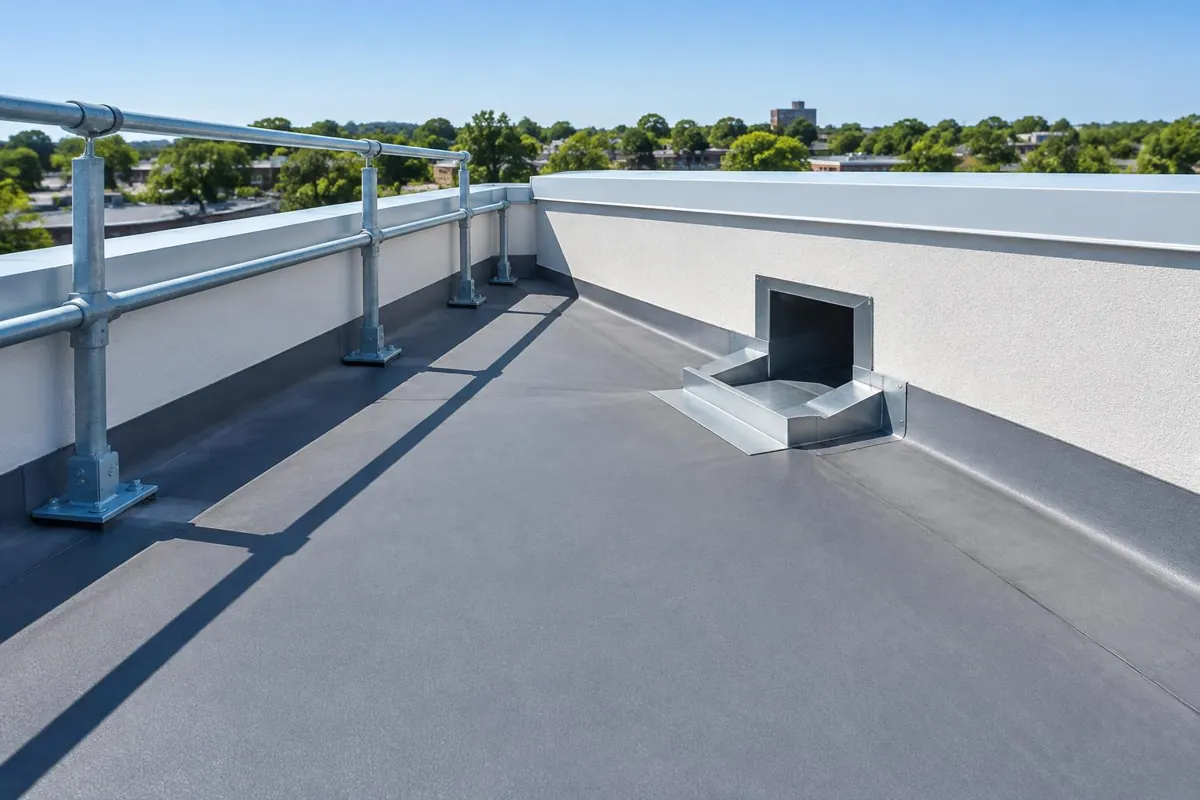
Edge outlets, often called scuppers, also need a clear path. Leaves or loose roof debris can hold water back at these spots. Do not climb up to clear them yourself. Ask what is blocked, where the water should go, and whether an overflow path exists. Keep drain work and roof seal work clear in the scope so neither gets missed.
Find Why Water Keeps Ponding
Ponding means water sits in a low spot instead of draining away. A clogged outlet is one cause. A low area may also hold water. Ask the roofer to check the slope, roof layers, and deck. Photos taken from a safe window can help show the spot. Tell the roofer whether the pool shrinks, stays in one place, or spreads toward a wall or seam.
A patch can seal a hole but cannot make a low spot drain. The repair may need drain work, a change in slope, or a closer check of the deck. Ask which cause the proposed work will fix. If the quote only covers the leak, ask what that means. Water may still collect there after the repair.
Tell us where the leak, wear, or damage needs attention.
Look for Punctures and Edge Stress
Small holes can form near roof equipment, paths used for service, or spots with loose debris. A hole may be hard to see yet still let water reach the layers below. Tell the roofer about recent work near vents or equipment if you know of any. That fact can guide the search without proving who or what caused damage.
Roof edges and raised joints need checks of their flashing and securement. A split at a wall or pipe may need more than a flat patch. The roofer should check the flashing, which seals these joints, and the way it is held in place. Ask whether the repair will address movement or just cover the crack that movement left behind.
Do Not Seal Wet Layers Inside
Water can soak insulation beneath a roof sheet while the top looks fairly sound. Trapped moisture can weaken the repair base and harm parts below it. Ask how the roofer will check the layers, not just the surface. A moisture survey or a small test opening can help define the wet area. Use it when the roof condition calls for it.
Wet material may need to come out before a lasting patch can go in. The quote should explain how far that work may extend and what happens if more damage is found. Ask for photos of exposed layers during the work. A dry, firm base is part of the repair, not a detail to skip once the leak stops.
Choose a Repair Scope, Not a Cover-Up
A local repair makes sense when the problem is limited. The roof around it must still hold a sound bond. Broad seam failure or wet layers across a large area may call for more work. Ask the roofer to show the line between the two. You should know why a patch is enough or why it may fall short.
No single coating fits every flat roof problem. A coating will not restore a weak deck or make wet insulation dry. Some sound roofs may suit a system-specific coating after repairs and prep. That choice needs proof that the products fit the roof. Ask what will be fixed first and what limits remain after the coating is applied.
Leak repair and drainage are separate
- 1Leak point
Check the seam, drain joint, flashing, and wet layers.
- 2Water path
Check blocked outlets and low spots separately.
- 3Repair scope
State which cause each task fixes and what remains open.
Compare the Work Behind the Cost
Flat roof repair cost depends on more than the size of the visible hole. Safe access, roof type, seam length, drain details, and the depth of wet layers can change the scope. Removing failed patches also takes work. Ask for a written quote that separates known repairs from hidden damage. Hidden damage may need approval once the roof is opened.
Compare quotes by their repair steps, not just the total. Look for prep, materials, wet-layer removal, disposal, and final checks. GAF's roof repair page offers background on common repair components. It does not replace a roof-specific plan. Ask each roofer what is included and what is left out. Ask how added work would be priced before it starts on your roof.
Check Local Fit, License, and Permits
Peoria Roofing Help focuses on the Peoria, Illinois market. Its planning circle extends 15 statute miles around East Peoria City Hall. That landmark is a map reference, not a site office. The circle covers only part of Metamora. Share the property address when seeking help. A roofer can then confirm whether the location and roof type fit their service.
Use the Illinois IDFPR license lookup as a hiring check for a roofer. Confirm the business name and license status before you sign anything. For property in Peoria, check the city's official building permit page. Ask who will confirm permit needs for the proposed scope. Ask who will handle any required permit before work starts.
Prepare for a Useful Roof Assessment
You can help narrow the problem without setting foot on the roof. Gather safe indoor photos, old repair papers, and notes on where water appears. Include any roof type listed in your records. Move items away from drips if it is safe. Keep people away from sagging ceilings and water near lights, outlets, or other live electrical parts.
When you speak with a roofer, ask for system identification. Ask for a drain check and a plan to assess wet layers. Request photos that support the proposed repair. Be clear about rooms or equipment at risk below. The next useful step is a defined assessment and a written scope. Do not make a blind choice of patch, coating, or full replacement for the roof.
Flat Roof Repair in Peoria: the key steps
Read the full transcript
Flat Roof Repair in Peoria.
Flat roof repairs start with system identification because TPO, EPDM,
and modified bitumen need different repair methods.
TPO roof seams use heat welds,
while EPDM rubber seams need compatible adhesive or tape and proper preparation.
Standing roof water calls for a drainage check
because sealing a leak does not fix a low spot.
Wet layers beneath a flat roof may need removal
before a new patch can provide a sound repair.
A written flat roof repair scope should name materials,
preparation steps, hidden damage terms, and final quality checks.
Your questions, answered.
Can a flat roof leak be fixed with one patch?
Yes, if the hole or failed seam is small and the nearby roof is sound. The layers below must also be fit to keep. Ask a roofer to show why the patch area is large enough and how its edges will bond to the existing roof.
Is standing water proof that I need a new roof?
No. A blocked drain may be the main cause, but a low spot or deck issue may need more work. The key is to find why water stays there. Ask whether the plan fixes drainage, seals a leak, or does both. Those are not the same tasks.
Can the same patch product repair TPO and EPDM?
Do not assume it can. TPO repairs commonly rely on heat-welded sheet seams. EPDM repairs use compatible adhesive or tape with the required prep. Ask a roofer to identify the roof first and use parts approved for that system, including any primer or cleaner the repair needs.
Why might a roofer open part of the roof?
A small test opening can help show the roof layers and whether moisture has reached them. It may also reveal a weak base hidden below the sheet. Ask why the opening is needed, how it will be closed, and how the findings could change the repair scope.
What should I ask before I approve the repair?
Ask for the roof type, leak cause, repair steps, and limits of the work in writing. Check how wet layers and added damage will be handled. Confirm license status through IDFPR and ask about permits. Also ask how the roofer will check the finished seams, patches, or drain seals.
Sources behind this page
- GAF roof repair guidance
- Illinois roofing license resources
- GAF: Single-Ply Roof Membrane Types and Comparison
- GAF: EverGuard TPO/PVC Self-Adhered Roofing System Manual
- Carlisle: HP-250 Primer Product Data Sheet
- GAF: Modified bitumen roofing systems
- GAF: Liquid-Applied Roofing Manual
- Carlisle: Owner's Manual