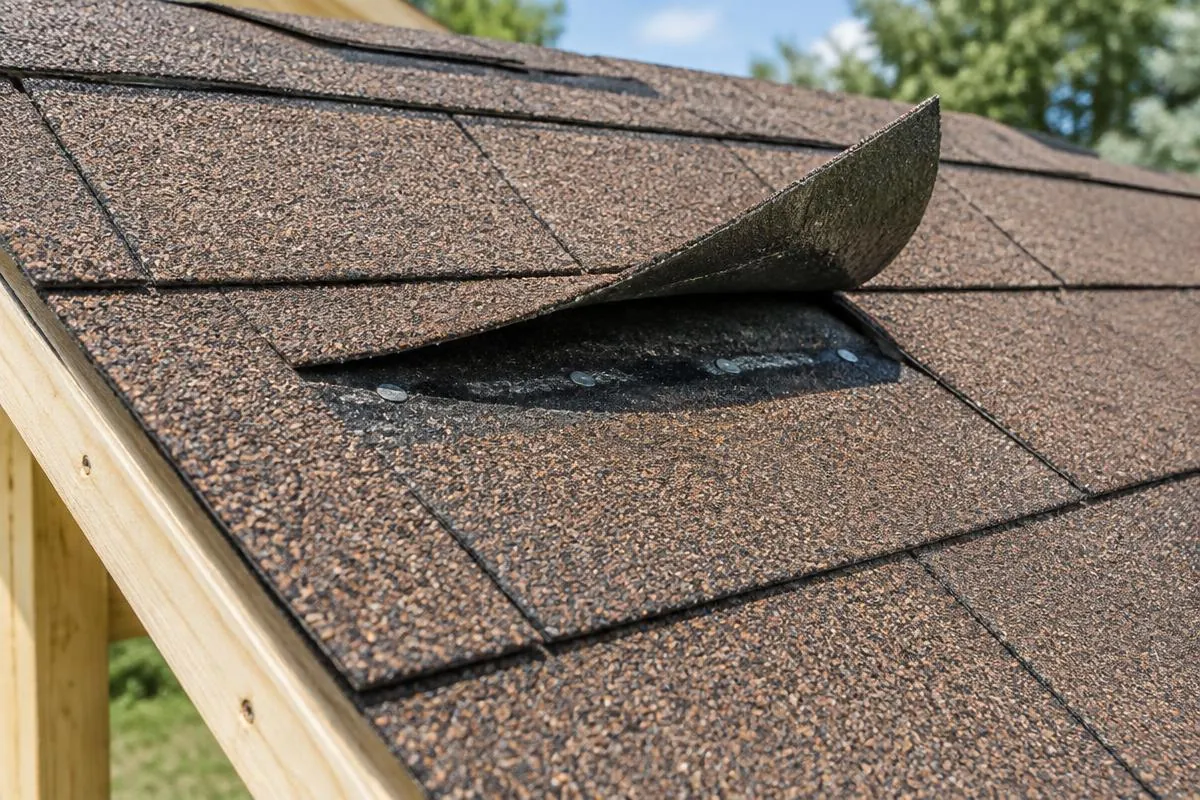
Missing shingles are the start of the inspection
A shingle in your yard is a clear sign. A lifted roof edge is too. Ask for a roof check after wind. Ask for a check of the open spot. Check how it was attached. Check the area around it. Do this before picking a patch.
For your Peoria wind repair request, say which side of the house is hit. Say if water is getting in. Stay away from hanging material. Stay away from damaged trees. Stay away from downed power lines. Do not climb a ladder. Do not push a loose piece back. Do not climb up just for a photo.
Describe what moved and what remains unknown
Use plain facts. List a group of missing shingles. List a ridge cap out of place. List bent edge metal. List debris on the roof. GAF's storm guide lists moved covering and flashing as reasons to get a check. A view from the ground is not a full check by itself.
Keep new wind damage separate from old curling, stains, or wear you already knew about. If you found roofing pieces in the yard, take a safe photo of them. Do not guess their exact spot on the roof. Let the real inspection connect the loose piece to the roof.
Map wind repair beyond the missing piece
- Observed loss
- Adjacent covering
- Attachment and seal
- Ridge or edge details
- Concealed layers if opened
- Finished repair boundary
Review sequence, not a diagnosis.
Check the edges around the obvious gap
A repair plan should explain how far the checker looked around the gap. Ask about nearby shingles. Ask about the nail area. Ask about roof edges. Ask about any flashing near the damage. The key question is simple. Can new work join the sound roofing left behind?
GAF's bulletin on storm-damaged shingles makes a key point. Damage can mean cracks. It can mean a weak seal too, not just missing pieces. That supports a closer, trained look where wind moved the covering. It does not mean every wind-hit roof needs full replacement. Ask for real findings from your roof. Ask why that work area was chosen.
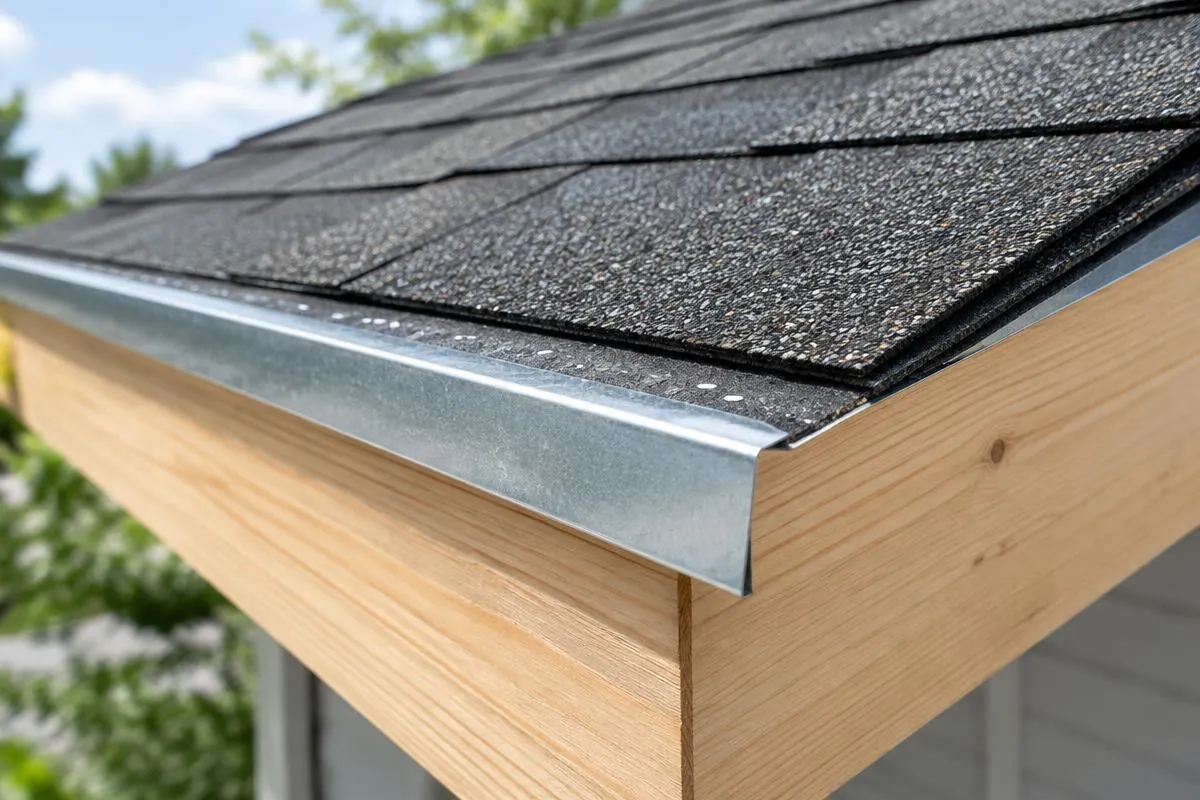
Give ridge caps and edge metal their own lines
The ridge, the roof edge, and a field shingle area are three different spots. If more than one is hit, ask the bid to list each one apart. Ask which products get replaced. Ask what layers beneath get checked. Ask how the finished spot will drain water.
Loose fascia or gutter parts may need their own fix too. The same storm may have hit both. Do not assume the shingle price already covers them. A labeled photo helps a lot here. It shows the roof covering apart from the edge flashing. It shows the trim too. This matters most when a bid uses broad terms like storm repair.
Request wind damage roof help in Peoria
Tell us what needs attention.
Plan temporary protection without losing the permanent repair
Water may be coming in. Roofing may be exposed. Ask if a temporary cover is needed first. That cover plan should name the spot. It should name its limits. It should say when someone checks it again. It should say if removing it later is part of the final repair.
Do not treat a cover over the gap as a finished roof. Ask what still needs checking under it. Ask how those findings get written down. Full access may not be safe right away. Write down what is still unknown. Do not assume a quick visit already answered everything.
Compare the small repair with the wider option
A few new shingles may work fine. This depends on whether the roof around them can support that fix. A bigger section may be needed for other real reasons. Ask the bidder if repair is possible. Ask how materials will match. Ask how new roofing joins the old.
Keep looks and water-tightness as two separate questions. A slight color mismatch is not the same problem as a weak repair edge. A full replacement may be suggested. Ask for proof that a smaller fix will not work. Compare the real work included. Do not just compare a low patch price against a big bid with no shared ground.
Wind-event location packet
Known facts and open questions
- Event date
- Unknown
- Building side
- Unknown
- Observed displaced material
- Unknown
- Water indoors
- Unknown
- Temporary cover
- Unknown
- Review surrounding attachment and seals, not just the missing piece.
| Material | Building side | Date |
|---|---|---|
| Unknown | Unknown | Undated |
Create a wind-event location packet
This tool pairs the storm date with the side of the house. It notes what you saw move. It makes separate rows for covering, attachment, edge details, and any temporary work. Add a room name if a leak followed the storm.
The tool never guesses the wind speed from the damage. It never says which nail failed. A missing-shingle entry leads to a check question. It is not a nail-count rule. Print the record so every bidder sees the same facts. You may want to call your insurer. Keep your roof findings and your policy questions in separate notes.
Keep approvals and closeout records clear
Extra work may come up. Before it gets added, ask for the finding in writing. Ask for the spot in writing. Ask for the new price in writing. When the job ends, ask for photos of the repair edge. Ask for photos of any layers that got opened. Keep product names, warranty terms, and the invoice with your first storm record.
For claim questions, the Illinois Department of Insurance has advice. Keep damage and repair records. Talk with your insurer directly. Coverage depends on your policy and the claim review. Start with the wind repair request for moved materials. Choose the hail page for impact marks. Use the emergency page for damage that needs help right away.
Your questions, answered
Can lifted shingles simply be pushed back down?
That is not a call to make from the ground. A trained person should check the shingle, its seal, and its attachment. They should follow the maker's real instructions. Do not climb up to test it yourself.
Does a shingle in the yard mean the whole roof is bad?
No. It means the hit area and nearby spots need a check. The plan should follow real findings, not jump from one loose piece to a whole-roof guess.
Will a repair look exactly like the old roof?
Ask the bidder to show what material is on hand. Ask about any color or shape difference. Write down the look limits and the water-tightness goal, so you know what the finished job will give you.
What if a temporary cover is already installed?
Tell the roofer who put it there, when, and what area it covers. Ask who will remove it, check what is hidden, and finish the real repair. Keep its photos and cost apart from the permanent repair record.