See the steps below to plan the right work for your roof.
Start with the task, not a dollar figure
Write a short line about the task you want priced. For example, you may want a leak traced and a repair plan. That is different from asking for a price to swap a known damaged part. If the cause has not been found, say so. A price for the wrong fix is not useful. That is true even if it fits your budget.
GAF's repair page names the extent of damage, roof materials, and location as cost factors. It also says that a partial repair may be possible in some cases. Those are broad points, not a price for a Peoria house. A roofer needs to review the actual roof and explain how the proposed work fits it.
Separate a check from a repair
Ask what the first price pays for. Is it a visit, an assessment, a repair, or a mix of those tasks? What will you receive if the cause cannot be found on the first visit? Is there a written report? Does any visit charge count toward later work? These are questions for that firm's written terms, not rules this page can supply.
Keep the visit and repair on separate lines in your notes. If they are sold as one package, record that fact instead of inventing a split. Read the roof inspection page to plan the report questions. It can help you ask what was observed and what was hidden. Ask which finding supports the next proposed step.
Give each bid the same starting facts
Create a small fact sheet for the firms you contact. Name the wet room or visible damaged roof area. State when you first noticed it. Add past work that you can confirm. If you do not know the roof age, mark it unknown. A clear gap is more useful than a guess. A guessed fact can end up in every proposal you receive.
Share the same facts with each roofer. One firm may later find new damage. Ask whether that changes the scope you sent to the others. You do not need to pass along a rival's price. The goal is to compare responses to the same problem. Keep private policy papers and account details out of a simple repair brief.
Locate the work in plain words
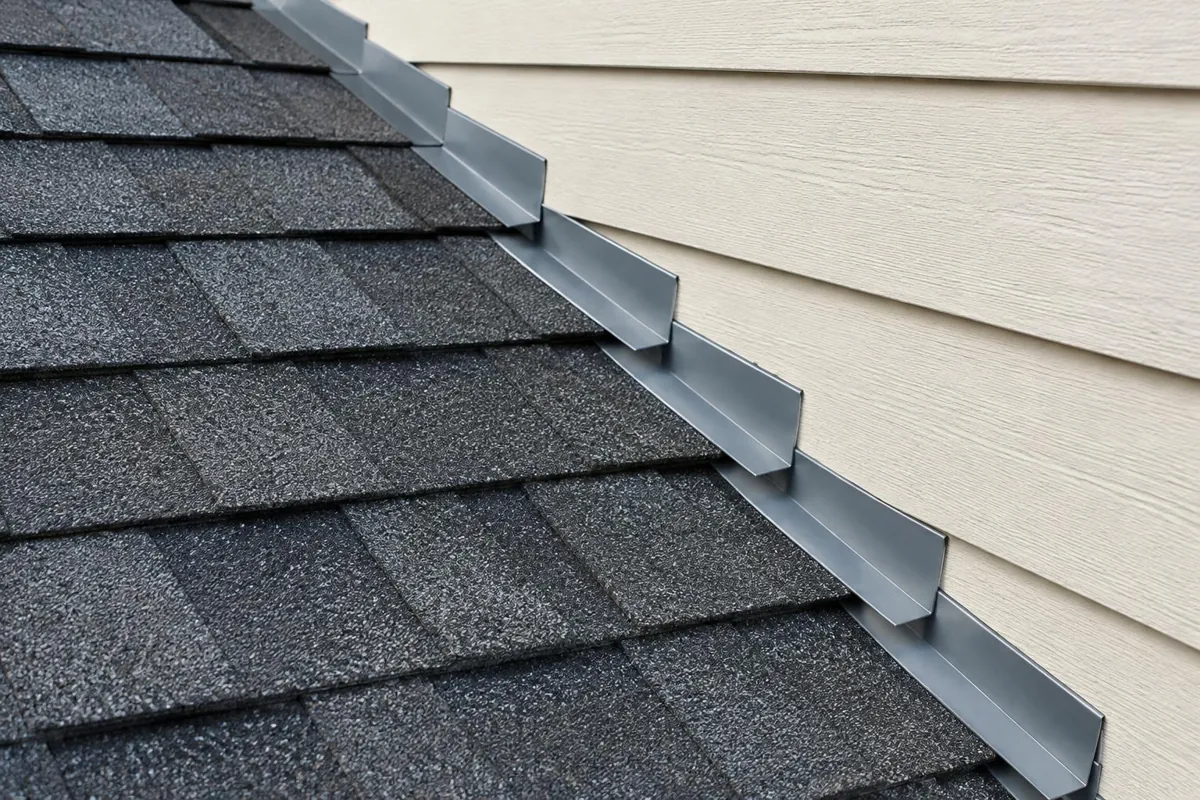
Ask the proposal to show where work starts and stops. Front porch, main rear slope, and wall joint may mean different places to different people. A marked photo or simple roof sketch can help. Ask the roofer to label the areas. Do not climb onto the roof to mark them yourself.
Use the location to compare scope, not just to file photos. One offer may cover a small spot. Another may include a full roof edge. Ask why the boundaries differ. If you have a repeat leak, use the roof leak page to organize its history. This can make a difference in what the roofer checks, without proving where the water enters.
Tell Us About Your Roof
Tell us what needs attention.
Ask what must come off
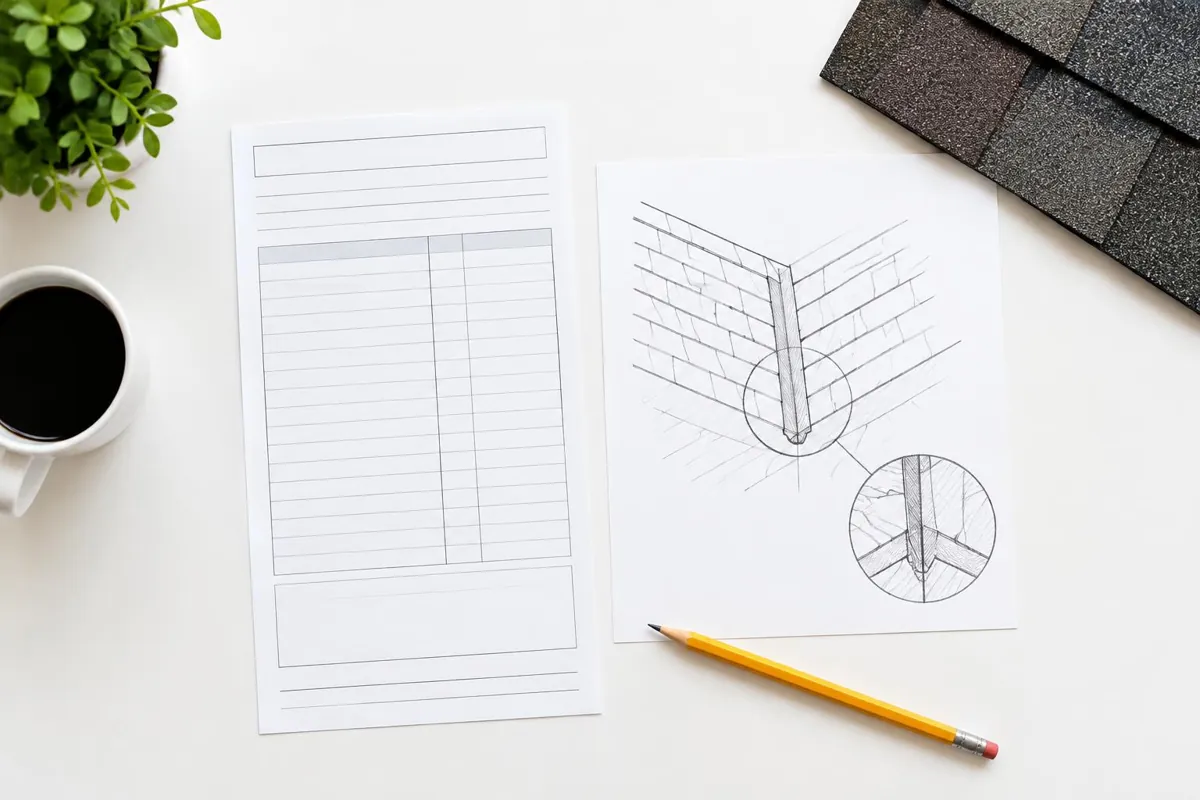
Have the roofer explain what will be removed to reach the repair. Which pieces will be reused? Which will be new? How will the work join the parts that stay? The price may just say patch roof. Ask for enough detail to understand the boundary of the job. You do not need a full trade manual.
A useful question is: what would make this repair larger once you start? Ask the answer before work begins. If hidden conditions may change the plan, put the change process beside the price. The issue is not whether every surprise can be ruled out. It is whether you know how a surprise will be shown, discussed, and priced.
Set the repair boundary
- 1New work
Identify the proposed local repair area.
- 2Join line
Ask how the repair joins sound parts that remain.
- 3Unchanged roof
Name the roof parts outside the quote; no blanket whole-roof promise.
Compare the parts without guessing a match
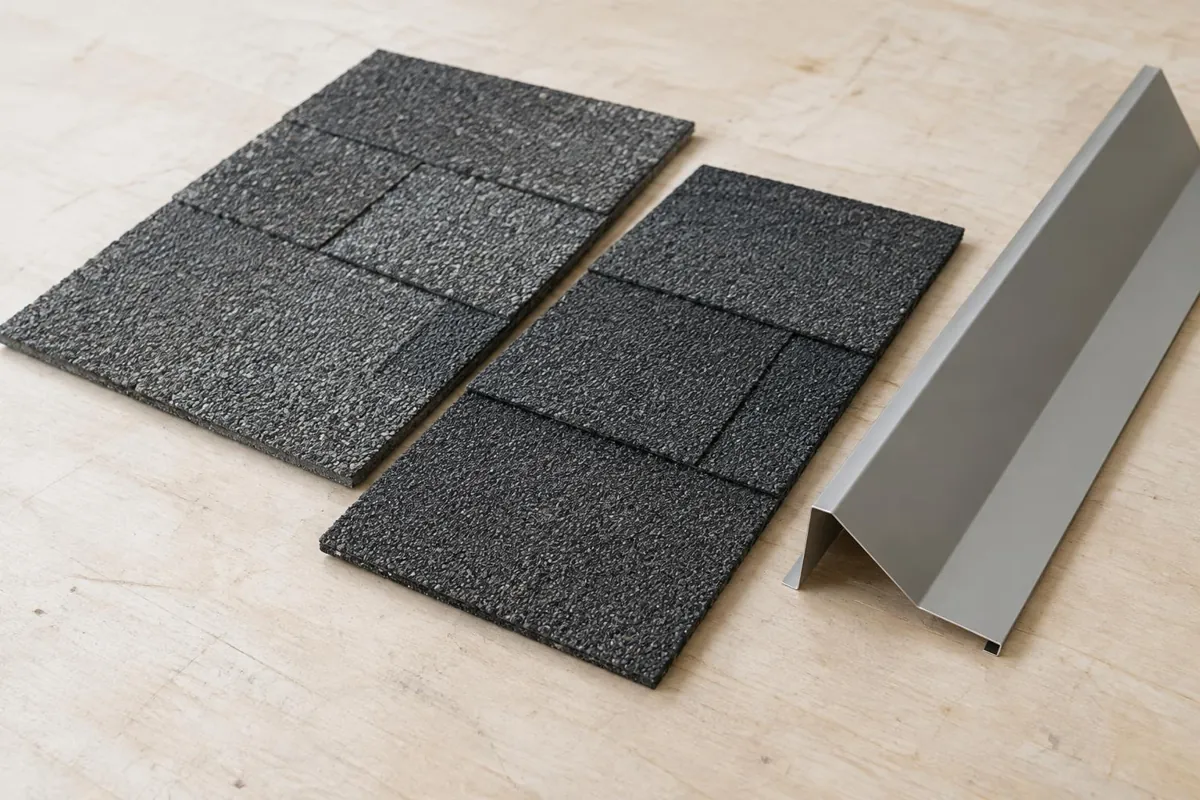
Ask for the product name and the part of the roof it will repair. Ask whether the proposed material can work with what is there. The roofer may say a matching product is no longer made. Ask how that affects the plan. Keep the answer in writing. A color choice and a sound repair detail are separate questions.
You can also ask what the finished area may look like from the ground. A small repair may be visible. Ask how close the color match may be. Ask about the work quality as a separate point. For damaged shingles, read the shingle repair page first. It can help you choose between a local fix and a wider scope.
Name access and site limits early
Tell the roofer about locked gates, narrow paths, shared drives, and areas that must stay clear. Ask where tools and removed materials would go. Ask how the crew plans to protect nearby items. These details let the firm explain any site work that is part of its price. Let it decide safe roof access and the work method.
Do not assume a charge is fair or unfair from its name alone. If you see access, setup, or protection on a bid, ask what task it covers. If that task is included in a lump sum elsewhere, record it as included. You cannot compare two prices well when one firm's visible line is buried in another firm's total.
Keep cleanup and room work separate
Ask whether the price includes removal of old roof material, site cleanup, and disposal. If a container is needed, ask where it will be placed. Check who will confirm any local rules for that location. A clean yard at the end is one task. Safe site control while work is in progress is another.
A roof repair price may not include wet ceiling work, paint, drying, or work on lights. List those as separate open items if they apply. Ask who will assess them and who may give a price. Do not label them covered just because a roof leak started the discussion. A repair scope and an insurer's decision serve different purposes.
Tell us where the leak, wear, or damage needs attention.
Put hidden work in its own row
A proposal may include a stated amount for work that cannot be measured yet. Ask exactly what that amount includes. If there is a unit price, what is the unit? How will the quantity be confirmed? What happens when the work is less or more than the stated amount? Do not make up a quantity to fill the space.
Your sheet should have a place for evidence, approval, and price. Ask for photos or other records that show the need. Agree on who may approve the added work and how that approval will be recorded. If a final quantity is not known, mark the total as incomplete. A clean-looking sum is not a reason to hide an open cost.
Use a three-part comparison sheet
For each written offer, sort items into fixed work, optional work, and unresolved work. Fixed work has a clear scope and stated price. Optional work is a choice you have not accepted. Unresolved work lacks a detail needed for a fair comparison. These labels are for your planning notes. Ask the firm to confirm how its own contract treats each item.
Next to each number, record the document name and date. If a firm revises a price, keep the old one. Use the new version for the comparison. If you cannot trace a number back to a written source, leave it blank. A neighbor's bill or an online national range does not fill that gap for your roof.
| Row type | Put here | Ask next |
|---|---|---|
| Fixed scope | Written work with a confirmed price. | Does this include all listed charges? |
| Optional scope | A priced choice you have not accepted. | What changes if I leave it out? |
| Unknown scope | A task or amount not yet resolved. | Who will answer, and what proof is needed? |
Keep three cost buckets clear
- 1Fixed scope
Write the agreed tasks and verified amounts.
- 2Optional work
Keep chosen extras separate from the base scope.
- 3Unknown work
Leave missing amounts open; state how added work gets approved.
Do the math only after the scope is clear
The optional worksheet is blank by design. Enter only amounts from written offers or charges you have confirmed. Do not use it to estimate labor hours, roof area, or likely damage. It adds what you enter and keeps unknown items visible. It does not set local prices, predict a final bill, or choose a roofer.
Check for double counting before you add. A disposal cost may already be inside a bundled price. A deposit is part of a payment schedule, not always a new fee to add on top. Ask the firm where unclear amounts belong. Do not add tax again if the stated total already includes it. Leave the calculation pending until the firm explains.
Test what a difference in price means
When two totals differ, write a question beside each scope gap. One bid may include a repair check after completion. One may leave that undefined. One may specify new parts at a joint, while the other names only a surface treatment. Ask what each plan is meant to achieve and why it fits the finding.
The worksheet should lead to a better question, not an instant winner. You may find that both offers cover different valid tasks. You may find that one needs a clearer explanation. The company comparison page covers business and contract checks. Complete those checks even after the price list becomes easy to read.
Decide what counts as finished
Before you agree, ask what the firm will show you at the end. Which photos, notes, or checks will document the work? Who will explain anything left unresolved? Ask what to do if the same symptom returns. Keep any written promise with its terms, rather than relying on a phrase such as leak fixed for good.
This step makes the price easier to understand. You are comparing a stated task and its handoff, not just a brief time on the roof. Ask whether the last bill will list approved changes and match the final scope. Keep the bill, report, and product details together. They form a useful record if you need a later roof review.
Leave room for a different decision
A repair estimate can raise a wider question about the rest of the roof. Ask what evidence points beyond the local fix. Do not treat a high number alone as proof that a full replacement is needed. Nor should a small number prove that a patch will solve the cause. Both judgments need more than arithmetic.
Use the repair or replace worksheet if the scope keeps growing. It separates observed condition, unknown areas, and your own goals. If the work may involve an insurance claim, ask your insurer about the policy. Do not subtract a hoped-for payout from the repair price and call the result your confirmed cost.
What affects roof repair cost in Peoria?: the key steps
Read the full transcript
What affects roof repair cost in Peoria?.
A roof repair price needs a clear task.
Ask which finding the work addresses before you compare dollar totals.
For a repair offer, ask whether the price covers a check, the work, or both.
Keep the answer with it.
In a roof repair sheet, leave unknown amounts blank.
Ask how hidden work will be shown, priced, and approved.
The repair worksheet adds your verified line items.
It has no local rates and cannot predict a final bill.
Before roof repairs, ask what final records you will get.
Keep changes, photos, and the last bill together.
Your questions, answered.
What is the average roof repair price in Peoria?
This page has no verified local price dataset, so it does not publish an average. The useful starting point is a written price for a defined task on your roof. Compare the scope, what is excluded, and how added work would be priced.
Why does a small repair still have several charges?
Ask what each charge covers. A visit, safe setup, material work, and cleanup may appear as separate lines or one bundle. The number of lines does not show value by itself. Check whether two firms have priced the same task.
Can I enter a rough guess in the worksheet?
Use a confirmed amount from a written source. Keep unknown items blank and note who must answer them. A guessed number makes a neat total but can hide the main cost question. The worksheet is for comparison, not for a new estimate.
Does a repair price include fixing the inside of the house?
Only the written scope can answer that. Ask whether room repairs, drying, and other trades are included. If they are not, keep them on a separate task list. Do not assume the roofer will arrange work that is not in its proposal.
How do I keep my comparison notes?
The worksheet runs only on your device. Its entries are not sent or saved. Print a copy if you want to keep your work. Closing or reloading the tool clears its fields, so save your own copy before you leave.