
See the steps below to plan the right work for your roof.
Separate what you saw from what it means
Start with something you saw or can confirm. You saw water on a ceiling. You found a piece of shingle in the yard. You received a report about a worn roof area. No one of these facts sets the full work scope. Write what you saw first. Put a possible cause on a new line. Keep it open until a qualified roofer checks it.
That split lets you add new facts as you learn them. It also helps you ask a clearer question: what finding supports this plan? A photo, report, or past invoice can support an answer. A claim that the roof is bad needs more detail. Ask the roofer what is wrong and where it is.
Begin with safe action if there is an urgent risk
Deal with a major safety risk first. Keep clear of a sagging area, loose material, or water near electrical equipment. Get suitable urgent help. Call emergency services for an immediate threat to life. Do not go onto the roof to prove whether the problem is small. Choose the final scope once the urgent risk is addressed.
For active water entry, the emergency planning page can help you prepare for that first contact. Ask a roofer to distinguish short-term protection from a lasting repair plan. A short-term fix does not settle the long-term plan. Keep its purpose and limits clear in the written record.
Draw three possible work boundaries
Ask about three levels of work. A local repair deals with a defined part. A wider repair may involve a larger area or several details. A new roof is a broader project. It also has limits and work it leaves out. These labels help you ask questions. Ask the roofer which ones could work for the house.
Ask which choices are viable and why. The answer may rule one out. Or you may have a choice of two sound plans. Ask where each plan begins and ends on a marked image. Include small roof sections and nearby details in the discussion. Ask what whole roof means in each bid. Both you and the firm need to mean the same areas.
Three alternative scope limits
- 1Local work
Fix a defined small area and explain its join.
- 2Wider work
State added areas and the limits that remain.
- 3Whole-roof work
List all included layers and areas; other building faults may still be separate.
Treat age as context, not a verdict
GAF names age, damage extent, and past repairs as key factors. A roof check can show how those facts fit your house. Age alone does not decide the work. Neither does a fixed share of damaged area or repair cost. Ask for a reason tied to your roof.
Look for a dated invoice or other record of past work. If a past owner told you the age, label that source. Some parts may have been changed at different times. Ask the roofer whether that matters to the choice. If the age is unknown, ask for a roof check. Leave the date unknown.
Tell Us About Your Roof
Tell us what needs attention.
Ask how far the issue extends
Are the flaws in one place or spread over the roof? Ask what was checked away from the clear damage. A report may name just one slope. Do not treat that as a full roof review. Ask what the roofer saw close up. Which parts could not be reached?
Make a simple map of the findings on paper. Draw broad roof areas and note the report page or photo that relates to each. Use unknown where there was no check. Do not mark the rest good just because no issue was noted. The map shows both what was checked and what was found.
Review what happened after past repairs
List each known repair with its date, location, and purpose. Then note whether the same symptom returned. If water appeared elsewhere, note the new spot. Do not assume the first repair failed. A repeat symptom needs review. It does not prove that all parts are beyond repair.
Ask the roofer how the history affects the present plan. Is it the same cause, a new cause, or still uncertain? Would a wider scope address the pattern in the notes? Read the leak record page if you need to reconstruct events. Its room and date notes can be more useful than a count of how many times someone visited.

Ask whether new work can join old work
A local repair needs a sound plan for how it meets the roof that stays. Ask the roofer to explain that join and the condition of the nearby material. Can the needed product be used with the existing system? If not, ask which finding or product limit rules it out. Ask for a clear reason. A claim that a patch never works is too broad.
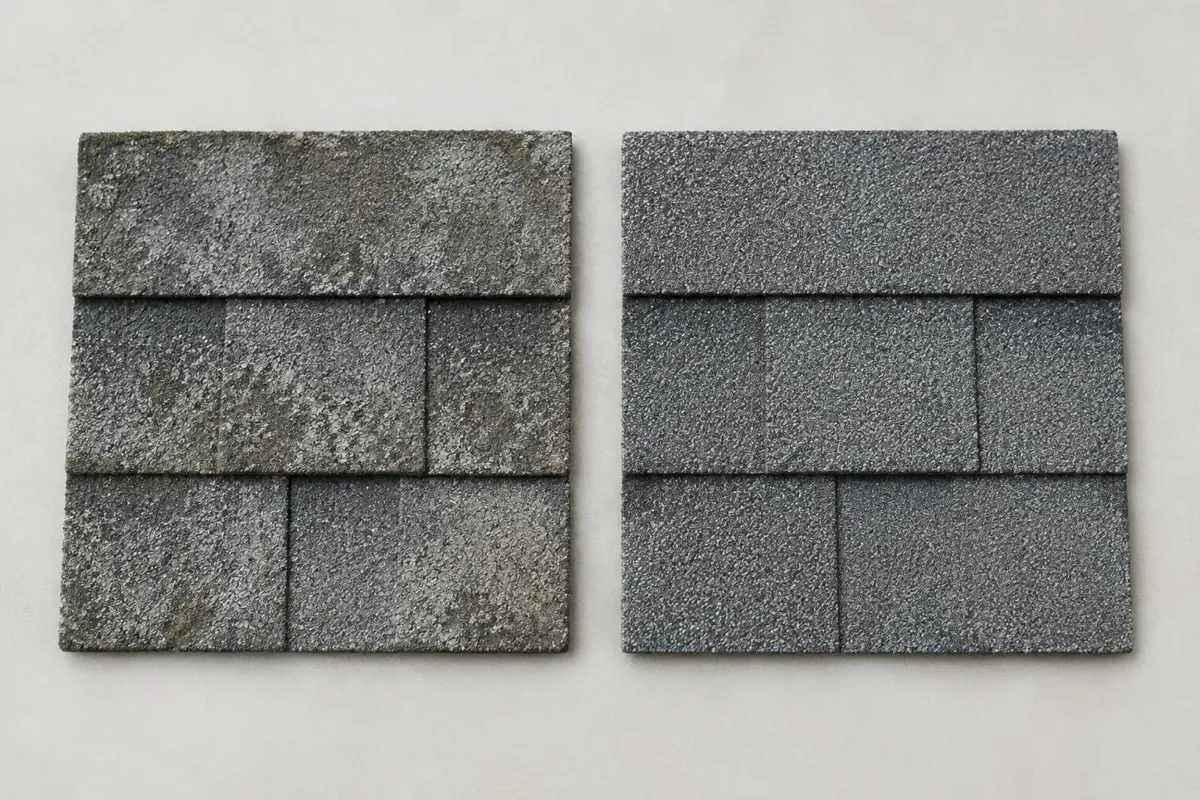
Put the finished look on its own line in your notes. You may care about a visible change in color or texture. Ask how the proposed repair is likely to look and what is uncertain. Do not confuse an exact visual match with proof of a sound roof detail. A good-looking match still needs a sound work plan.
Identify which problem each plan leaves open
For every plan, ask what will still need attention after it is done. A roof project may exclude room repairs, chimney work, or a separate low-slope section. Ask whether those tasks affect the outcome you want. If they do, identify who will review them and how the work would be coordinated.
This is often more useful than asking which plan lasts longest. A new roof can still leave another water source unfixed. A small repair can have one clear goal. Read the roof inspection page for report limits. Ask each firm to state its work limits just as plainly.
Tell us where the leak, wear, or damage needs attention.
Keep your goals separate from the findings
Write down what matters to you about the choice. You may want less work on the house. You may want fewer repeat visits or a new look. You may want a plan for the next few years. Tell the roofer about those goals. They do not change what the roof needs to function safely. Keep them beside the roof findings.
If you plan to sell, do not guess what a buyer will pay. If you plan to stay, avoid treating that plan as proof that replacement is necessary now. Ask what each viable scope would mean for your stated goal. Look for a sound plan that fits your needs. Do not rely on promised resale value or future savings.
Compare real costs for viable choices
Ask which plans the roofer can carry out. Then get written prices. Keep the scope attached to each amount. A repair cost and a replacement cost are not directly comparable if they cover different buildings or leave different tasks out. Ask for the scope gaps in writing. Read those before judging the price gap.
Use the repair cost page for a narrow work scope and the replacement cost page for a whole-system proposal. Neither supplies assumed local rates. Do not divide a guess about remaining roof life into a price and call it a reliable annual cost. Ask the roofer to explain what is unknown. Do not turn a guess into a precise forecast.
Use a question matrix, not a score
The matrix below helps you see what you know. It does not add points or label your roof repair or replace. For each row, cite a finding. Name the missing answer and who will give it. A key answer may be missing. The next step may be a further check.
Try one sheet for each plan the roofer says could work. Read across the same row to compare them. Does a plan address the observed issue? What does it leave unchanged? What event would require you to revisit it? Those questions show the limits of the choice. The sheet cannot promise a certain number of leak-free years.
| Evidence row | Write the finding | Ask what remains open |
|---|---|---|
| Extent | Name assessed areas and observed issues. | Which areas were not checked? |
| Past work | List dates, purpose, and later symptoms. | Same cause or a new issue? |
| Repair fit | Record the proposed join and products. | What rules out a local fix? |
| Plan limits | List work left outside each scope. | Who will handle that work? |
| Choice | Record your goal and the viable plan. | What would change the decision? |
Use evidence, not a shortcut
- 1Finding
What was observed, where, and by whom?
- 2Scope
Which roof areas were actually checked?
- 3Open question
What is still unknown or excluded?
- 4Next review
Compare local, wider, and full work without an age-only winner.
Ask for the reason when views differ
If one firm says repair and another says replace, ask which facts led to each view. Did they assess the same areas? Did they see the same hidden parts? Are they trying to solve the same problem? A gap in findings needs more review. It is not the same as a choice of finish or look.
Ask a qualified roofer to review an open factual point if needed. Do not ask someone to endorse a conclusion while hiding the first report. Keep all reports with their dates and limits. If new evidence changes the choice, record what changed. Seek reasons based on facts. A vote count is not enough.
Set a clear review point for a narrower plan
If you choose a repair, ask about follow-up. What signs should lead to a new roof check? Keep that advice with the repair record. Ask how to report a concern and what the firm has promised to do. Do not turn a planning note into your own warranty or a guaranteed safe wait period.
If the plan is to monitor an area, ask what monitor means for this roof. Which safe observations are useful? When should you contact the roofer? Do not delay help for a growing leak or danger. A review point helps you stay informed. It cannot show that the roof will stay the same.
Make the final choice traceable
Write a short note before you agree to the work. State the problem and the facts reviewed. List the sound options and your reason for the choice. Add the questions still open and who owns them. This note is for your use. It need not sound technical. A clear account is easier to revisit than a memory of a sales conversation.
Then review the exact firm and terms using the hiring page. You still need to check who will do the chosen work. Keep the final signed work list with the decision note. If the scope changes, ask if your reason for choosing it still holds.
Repair or replace the roof: build an evidence-based choice: the key steps
Read the full transcript
Repair or replace the roof: build an evidence-based choice.
To choose roof repair or replacement, start with observed findings.
Keep guessed causes apart from facts in the report.
For a roof decision, mark which areas were assessed.
An unchecked section is unknown, not proof of good condition.
When considering a roof repair, ask how new work joins what stays.
Get the reason if a sound join is not possible.
For each roof plan, list the tasks left open.
A wider project may still exclude the source of a problem.
A roof decision needs condition, history, and scope.
This page uses no fixed age or percentage to pick work.
Your questions, answered.
Does an old roof always need replacement?
No age alone decides that here. Ask for evidence of its current condition, the extent of the issue, and whether a sound repair is possible. Use reliable age records as context. If the age is unknown, say so rather than guessing.
Do several leaks prove that repairs will not work?
They call for a careful review of the pattern. Ask whether the leaks share a cause and what the report found. A count of wet spots does not tell you how much roofing must be changed. Keep room records and roof findings linked.
Should I use a percentage rule to decide?
This page uses no automatic percentage of damage or cost. Ask how the extent was assessed and what each viable plan would address. The same fraction can hide very different roof conditions, work details, and unresolved questions.
Can I choose a repair while planning future replacement?
Ask the roofer whether that is a viable plan for the actual roof. Request the repair purpose, limits, and follow-up steps in writing. Do not rely on this page to promise a safe delay or a set number of added years.
Can this matrix diagnose my roof?
No. It organizes evidence and questions for a qualified professional. It does not use photos, age, or a score to select work. Any on-page notes stay on your device, are not saved, and are not sent to a contractor.