
See the steps below to plan the right work for your roof.
Ask about the place and the work
A useful permit question has two parts. Where is the property? What work is planned? The answer may change if either part changes. A rule from a nearby town may not apply at your address. A rule for shingle work may not cover work on the roof frame.
Use the official offices below. Keep the site address, work list, and any roof drawings in your project file. Ask staff which details it needs to review. That packet gives the office a better basis for an answer than a town name alone.
Do not use a ZIP code as the deciding fact
A mailing city helps mail reach a home. A city limit shows the land within that city. These are different kinds of lines. A street address may use a familiar town name. The home can still sit outside that town's legal boundary.
If you are unsure, ask the local office to check the parcel. A parcel is a tract of land shown in property records. Its number helps staff find the right place. A school district is not a final permit answer. Neither is a real estate listing or a map search label. Ask which office has charge of the work at that specific site.
Make a small site card
Make a site card before you call. Put the street address at the top. Add the parcel number if you have it. If not, ask staff where to find it. Mark the town or county as “to confirm” until the right office checks it.
Name the building too. A house, detached garage, shop, and building with several homes may need different questions. Do not hide those facts under the word "roof." List each roof separately if more than one is part of the job. This helps you avoid an answer that fits the house but not the other building.
- Street address and parcel number, if known.
- Building use and which roof will be changed.
- Office that confirmed it has charge of the site.
- Date of that reply and any reference number.
- Work description used for the question.
Turn the bid into a clear work question
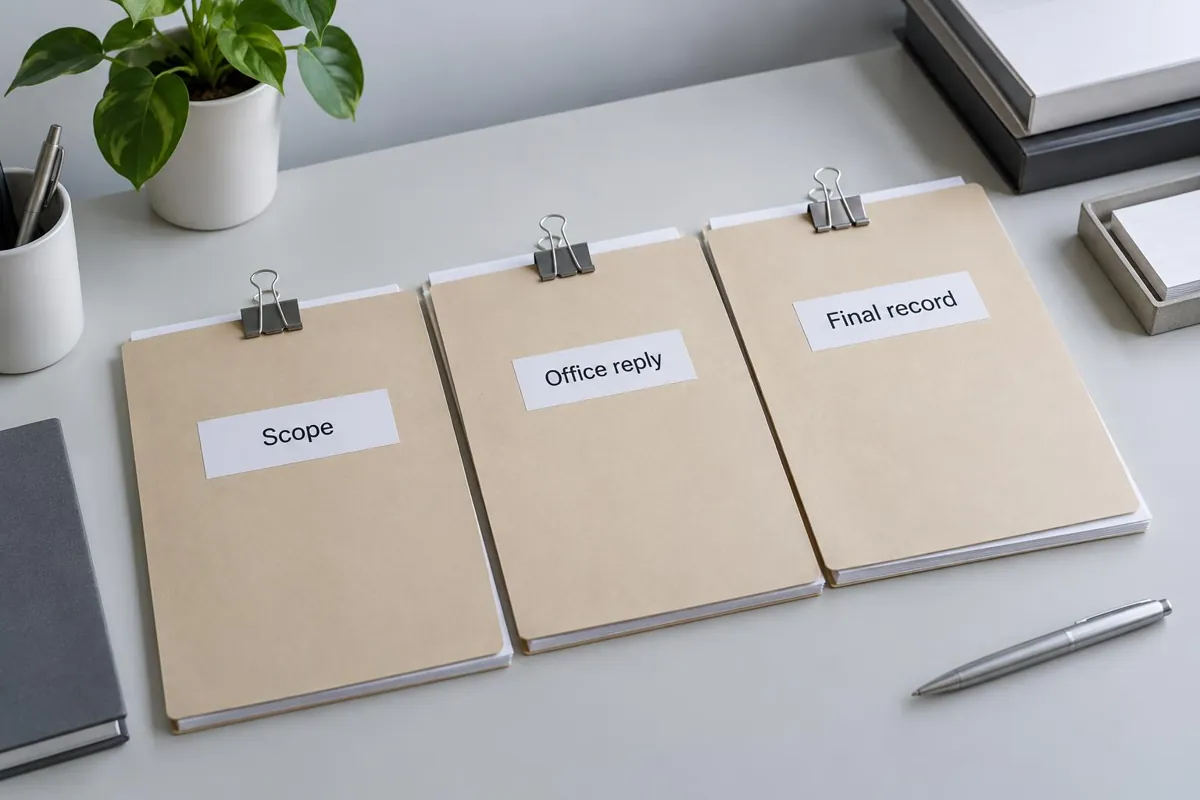
Use the replacement scope page to read the bid before you ask about a permit. A scope is the list of work in the bid. Does it call for a few shingles or a full roof? Will old layers come off? Will a new layer go over old shingles? Does it include wood below the roof surface?
Use the roofer’s actual words for work you do not understand. Ask the roofer to explain them. Do not label work “non-structural” on your own just to fit a short rule. That term concerns the parts that hold the roof up. If the plan may change those parts, make that clear when you ask the public office.
List other work in the same bid, such as solar, wires, or a new opening. Ask which items need a separate review. A roof-only answer may leave out these parts of the project.
A permit answer follows site and scope
- 1Exact site
Check the address and parcel; a ZIP is only a clue.
- 2Office
Verify which authority handles that property.
- 3Full work
Describe shingles, support work, solar, and other tasks separately.
- 4Record and recheck
Keep the answer and ask again when the scope changes. Morton and Washington separate some non-structural roof work; Dunlap uses the county route.
Tell Us About Your Roof
Tell us what needs attention.
Peoria: start with Building Inspections
The city’s permit page routes roofing questions to Building Inspections at the number on the official city page. Use that route for a site within Peoria city limits. The same page assigns public street and right-of-way matters to Public Works. Those are separate questions.
If a roof job includes a bin in the street, ask about that too. Do not assume the roof permit covers where the bin will sit. Tell staff whether you mean private land, a street, or an alley. Ask the office which form, if any, fits the proposed use.
East Peoria: check scope and firm status
East Peoria’s page links the building permit form and identifies the Inspections Department. It also says contractors must be registered with the city before a permit is issued. Ask how that fits the firm and work in your plan.
The page does not give us a blanket roof exemption. Start with the exact address and scope. A firm may say it has already handled the permit step. Ask for the record that matches this site and job.
Morton: keep the shingle rule narrow
Morton’s page puts shingle repair and replacement on its no-permit list. The page treats structural changes and solar as separate matters. It also states a roofing contractor must hold an Illinois roofing license.
Do not stretch the shingle line to cover every roof project. Show staff the full work list. Include wood support work, solar, or other changes named in the bid. Ask whether the plan fits the listed shingle work. Keep that answer with the version of the bid staff reviewed.
Pekin: ask about the proposed roof work
Pekin's official FAQ says a roofing permit is needed for a full tear-off and shingle replacement. A permit is also needed for a second shingle layer. Tell Building Inspections what work is planned. Ask which form and review steps apply before the job starts.
A Pekin mailing address does not settle the office for the site. Nearby places with similar names are separate places. Have staff confirm the site first. Then ask what must happen between filing the form and being allowed to begin.
Tell us where the leak, wear, or damage needs attention.
Washington: distinguish shingles from support work
Washington’s Building and Zoning page puts non-structural roofing in its no-permit column. It puts truss or structural support work in the permit-required column. The kind of work matters.
Ask the roofer to state whether support work is planned or might be found. Give that detail to the city. Do not use the page’s short roofing line as approval for a plan staff has not seen. If the scope grows, ask again.
Peoria Heights: use Code Enforcement
Peoria Heights links its building and demolition form from the village’s permits page. The page directs permit questions to Code Enforcement. It covers both home and business work.
We have not drawn a roof-specific yes or no from that page. Ask Code Enforcement about your site and plan. If staff needs a drawing or more detail, ask what the drawing must show. A link to a general form is a starting point, not a ruling on your roof.
Dunlap: follow the county route
Dunlap’s official notice says permits, payments, and inspections go through Peoria County Zoning as of April 2024. A zoning certificate may be needed. If so, the county may send you back to the village for that record.
The county’s home-permit page lists reshingling as work that does not need a permit. Ask the county whether that rule fits the address and whole scope. A Dunlap postal address alone does not prove the property is in the village. Keep the village and county roles clear in your notes. For more local planning notes, read the Dunlap page.
Metamora: ask the Zoning Administrator
Metamora’s permits page directs project questions to the Zoning Administrator. It also links village rules and a zoning map. Use that office to find the next step for a site within the village.
Use that route to check the roof rule for your project. Show staff the proposed scope. Ask them to confirm the site. Ask which forms, checks, or related work need review. Keep an unknown answer open until the office replies.
If the site is outside a town
Ask which county or other local office has charge of the site. Do not carry a city’s permit rule across its boundary. If one office refers you to another, write down that office and use its official contact page. Confirm the address again with the new office.
A border can be hard to judge on a small screen. A planning map helps you ask a better question, but it is not a parcel decision. If records seem to disagree, tell staff what you found. Ask them to identify the record you should use. Do not resolve the conflict by picking the less strict rule.
Record the answer, not just a yes or no
Keep the reply tied to the facts you gave. A short note such as “no permit” loses its meaning if it omits the address and work. Save the scope, the date, the office, and any limits in the answer. Ask for a written reply or a link to the rule when you can.
Keep unknowns too. Staff may need more detail; that is not an exemption. Ask who should supply it. Silence or a saved form does not prove that work can start.
| Question to settle | What to keep |
|---|---|
| Does this office serve the site? | The office and date of confirmation. |
| What work did staff review? | The exact scope and version date. |
| Can work begin? | The issued record or clear direction from staff. |
| What checks are needed? | The steps and who will arrange them. |
Assign the permit tasks in writing
Before work begins, make sure the owner and roofer know who will do each task. Who files the form? Who pays the fee? Who sets up any checks? Who keeps the final record? Ask that these roles be clear in the written scope.
This is a task list, not a statement of who the law makes responsible. The permit office can explain its requirements. If the bid only says “permits included,” ask what that covers. A clear answer should name the job tasks. It should not leave each person thinking the other will do them. Use the company page for other hiring questions.
Ask again when the plan changes
A job can start with one scope and uncover a different need. Ask in advance what the crew will do if the work changes. Who will contact the owner? Who will ask the permit office about the new scope? What has to be reviewed before that part goes on?
Keep the old scope and the revised scope as separate records. Date each version. A note about support repairs should not be buried in a message about shingle color. Ask for the change to be stated plainly. Then keep any new city or county direction with that change. Use the repair or replace page to compare questions about the changed work.
Keep our planning circle separate
This page uses a planning circle of exactly 15 statute miles from East Peoria City Hall. The circle helps organize the places in this page. Permit boundaries come from local records and the exact parcel, so check those separately.
Our check of January 1, 2026 Census place shapes puts most nearby towns inside the circle. That list includes Peoria, East Peoria, Morton, Pekin, Washington, Peoria Heights, and Dunlap. Only part of Metamora is inside. These are whole town shapes, not ZIP areas. The check does not decide which office serves a single parcel. Use current local records for that answer.
Planning area, jurisdiction, and capacity differ
- 1Planning circle
15 statute miles from East Peoria City Hall; Metamora and Mackinaw are partial.
- 2Parcel jurisdiction
Actual property boundaries and work decide which office to ask.
- 3Roofer capacity
Confirm job coverage separately; the circle is not an office or service promise.
Close the project file with the final records
Ask the office how to learn whether required checks are complete. Keep its reply with the issued permit, revised scope, and any final notice. A finished-looking roof and a closed permit record are different things. Ask rather than assume that one proves the other.
Roof permits: find the right local office: the key steps
Read the full transcript
Roof permits: find the right local office.
For roof permits, ask who has charge of your site.
The ZIP code alone does not tell you.
For a permit question, describe the whole roof scope.
Shingle work and support work can have different rules.
For a Dunlap roof job, start with Peoria County Zoning.
The village routes permit steps to that office.
For a local permit reply, save the scope it covers.
Ask what must happen before the work starts.
For roof work that changes, ask the permit office again.
The earlier answer may cover only the old plan.
Your questions, answered.
Does every roof repair need a permit?
There is no single answer for all these places and all roof work. Rules differ by office and scope. Ask the right office about the exact site, materials, and changes. Do not use a nearby town’s rule.
Can my ZIP code tell me which office to call?
It can help you start a search, but it does not prove permit jurisdiction. Ask staff to check the street address and parcel. Keep that confirmed office in your project notes.
What if a roofer says no permit is needed?
Ask what work that answer covers and which local rule it uses. Confirm it with the office that serves the property. If the scope changes, the earlier answer may not fit.
Where do I start for a Dunlap project?
The village routes permits, payments, and inspections through Peoria County Zoning. Start with that official route and confirm the exact site. A needed zoning certificate may still involve the village.
What should I ask before filing a permit form?
Confirm the office, exact site, and full work scope. Ask which form fits, what details it needs, and what must happen before work starts. Agree with the roofer on who handles each step. Keep those tasks in the written project plan.
Sources behind this page
- City of Peoria: Permits
- East Peoria: Residential Permits and Development Requirements
- Village of Morton: Permits and Licenses
- City of Pekin: Building Inspections
- City of Washington: Building and Zoning
- Peoria Heights: Applications and Permits
- Village of Dunlap: Planning and Zoning
- Peoria County: Residential Permits
- Village of Metamora: Building Permits and Zoning
- City of East Peoria: City Hall
- U.S. Census TIGERweb: Incorporated Places
- Illinois Attorney General: Storm-related repair scam guidance