Find out which metal roof is really being offered
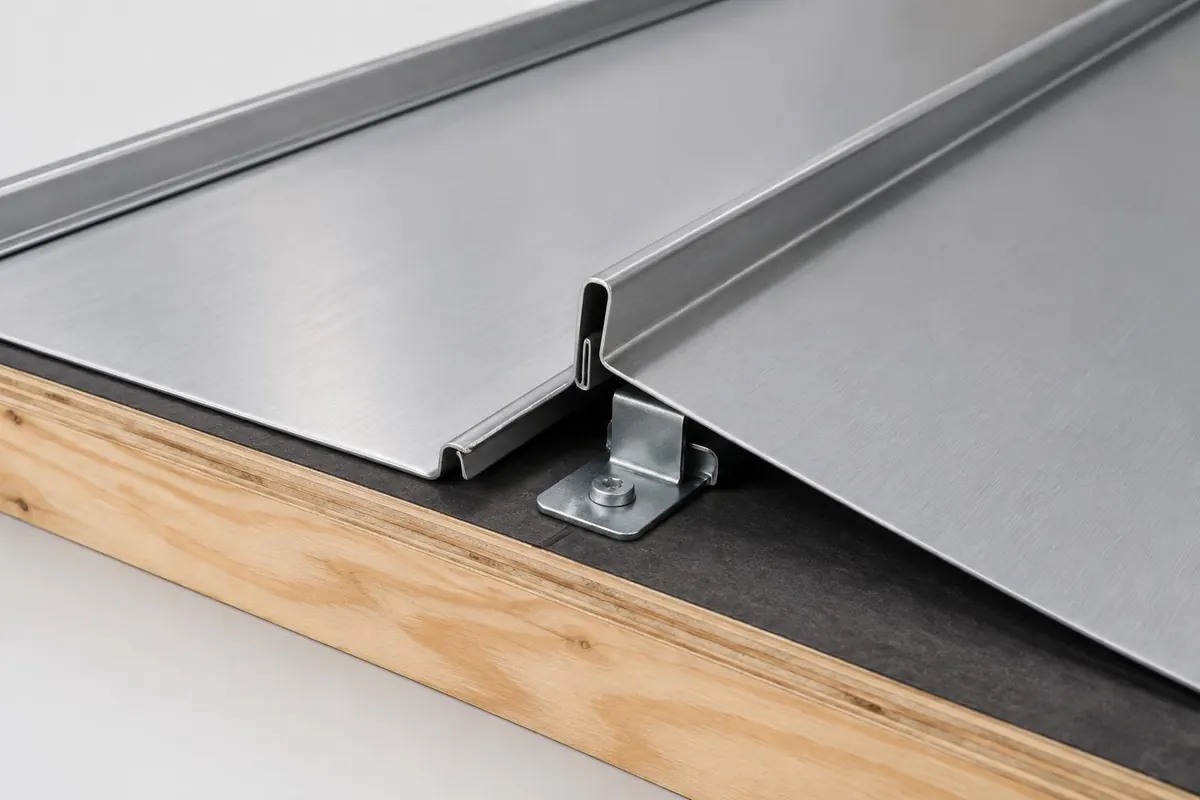
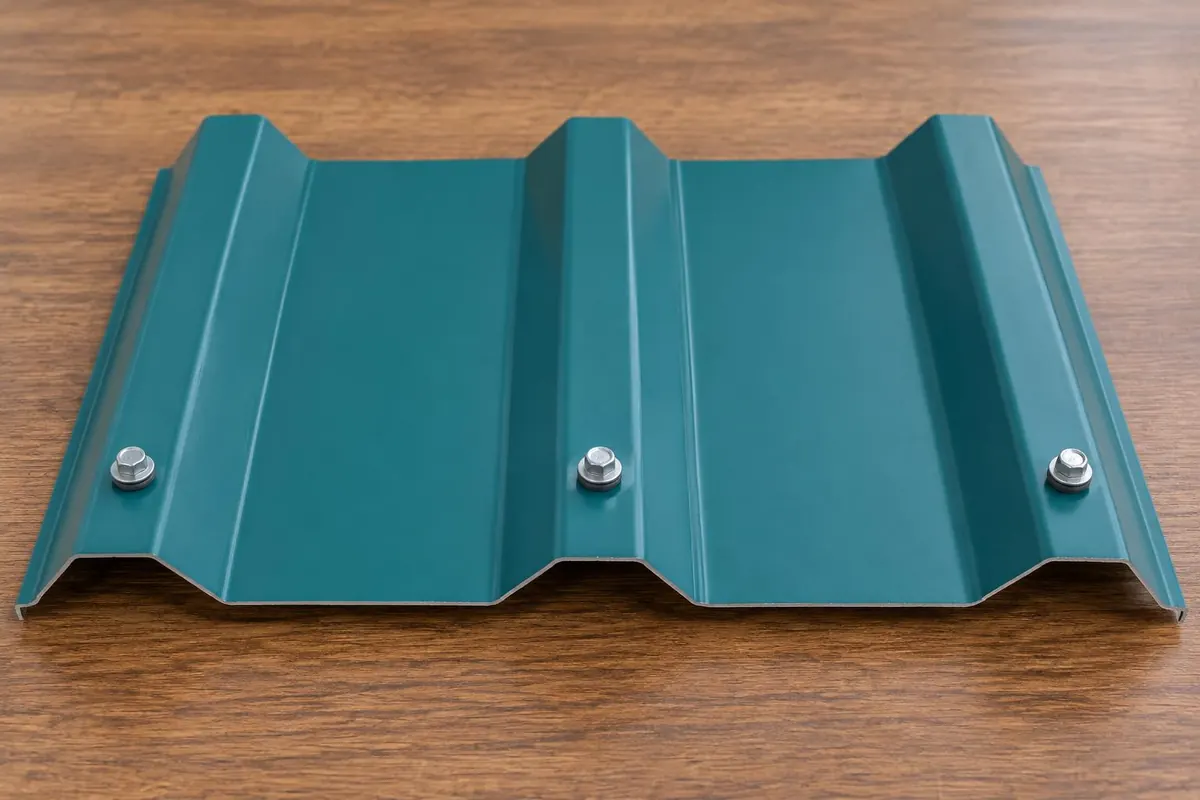
Two bids can both say metal roof. They can still mean very different systems. Standing seam usually hides its main fasteners. They sit under raised seams. Exposed-fastener panels have visible screws through the metal face. Start by asking for the panel name. Ask for a drawing of how it attaches. This gives you a clear base for the next step.
Neither label answers every question about your roof. The slope, deck, panel length, roof joints, and exact product all still matter. Compare how each bidder plans to handle them. If a bid only names a metal gauge and a color, ask for a fuller scope.
Understand what the fastener label really means
Sheffield Metals explains that standing-seam panels may use hidden clips or a hidden fastener flange. Exposed-fastener panels are screwed through their face. The screws go into the support below. Some standing-seam trim and flashing still use visible fasteners. So concealed does not mean a screw can never be seen.
Ask where fasteners will show on your roof. Ask how those spots will be sealed. A small sample piece is more useful than a photo from far away. Have the installer point out the seam. Point out the attachment point and the roof edge too. Keep the drawing with the bid. You will need it later to compare the same detail.
Plan for movement in the chosen design
Metal changes size as its temperature changes. The system needs a planned way to handle that movement. Sheffield's clip guide describes sliding clips and fixed clips. Both are used on panels. The panel can move where it meets the clip. A fixed clip does not always mean the whole panel is locked in place.
This is a question for the chosen system's design. It is not a guess you make from a photo. Ask the bidder to name the clip type. Ask for the detail used at your panel length. Do not mix parts from different systems just because they look like they fit.
Two ways to attach a metal panel
- Raised seam
- Concealed clip or flange
- System-designed movement
- Screw through panel face
- Sealing washer
- Supported panel lap
Simple idea only. Not an install drawing.
Spell out the upkeep needed for both options
An exposed-fastener bid should explain how screws, washers, and panel laps get checked over time. The Metal Construction Association warns about this. Too much driving force can damage sealing washers. Correct installation matters. Later condition checks matter too. Both are more useful than a vague promise to tighten things later.
Standing seam still has parts to check. These are joints, edges, openings, and attached parts. Ask both bidders for the maker's care guide. Ask who can do future work on it. Do not set a fixed swap date for every screw unless the system calls for it. The bid should describe real inspection needs. It should not call either roof maintenance-free.
Panel system worksheet
Stays on this page only. Nothing is sent or saved.
Match the panels to the rest of the roof
Compare the underlayment, support surface, wall flashing, pipe details, valleys, and roof-to-roof joints. Ask how a porch roof section will be treated if it differs from the main roof. The bidder should check each area against the panel's own instructions. One panel choice may not fit every part of the house.
List anything fixed to the roof, such as a vent or a snow guard. Ask who designs that attachment and checks that it works with the panel. If a part is left out of the bid, write that down before work starts. Hidden scope gaps can matter more than the visible seam style.
Request a metal panel system review in Peoria
Tell us what needs attention.
Compare finish samples and the written terms
View finish samples outdoors. Hold them at a similar angle to the roof. Write down the coating name, the color, and the metal underneath the finish. Keep those facts separate from the panel shape and thickness. Two panels with the same color name may not share the same finish system.
Read the finish warranty. Read any separate labor or weathertight terms too. Ask what each paper covers, what it excludes, and if your job qualifies. Do not assume a long paint warranty means the roof stays watertight that long too. Get the actual papers named in the offer.
Use the worksheet to find the gaps between bids
The panel worksheet places both systems on one card. It flags blank fields for slope, attachment, underlayment, trim, finish, upkeep, and warranty. It does not rate one system above the other. A blank field is a question to settle. It is not proof that a roof will not work.
When prices differ, use the card to ask why. One bid may include tear-off and new deck work. The other may use the old surface instead. One may include a tricky roof joint. The other may skip it. Settle these gaps first. Only then treat the price gap as the true cost of standing seam.
Pick the system you can describe and care for
Your next request should name the panel systems you want considered. List the details still missing from the bids. Say if looks, upkeep, a written warranty, or a tough roof joint matters most to you. This helps a roofer give you a real answer. It avoids another broad metal-roof price.
Do you already have a leaking metal roof? First find out the current system and its repair history. A replacement comparison is a different job. Finding one failed joint or screw is a repair job. Keep these two tasks apart. Then you can compare repair and replacement with clear facts about what each one fixes.
Your questions, answered
Does standing seam always use moving clips?
No. Some systems use sliding clips. Some use fixed clips with movement at the panel joint. Some use a hidden fastener flange. Ask for the exact panel and attachment detail. Do not assume every raised seam works the same way.
Will exposed screws all need to be swapped on one set date?
There is no single schedule that fits every product and roof. Ask for the maker's care guide and a condition-based check plan. The fastener, washer, support, and install work all matter here.
Can both systems use the same finish?
Compare the real product offers. The panel type alone does not tell you the coating or its terms. Write down the finish system and the metal underneath, next to each color sample, before you decide.
Is the lower metal bid always the better deal?
Only a matched scope makes a price comparison useful. Check tear-off, support work, flashings, attachments, warranty terms, and upkeep. A lower total with unknown parts still leaves big cost and work questions open.